
Salads
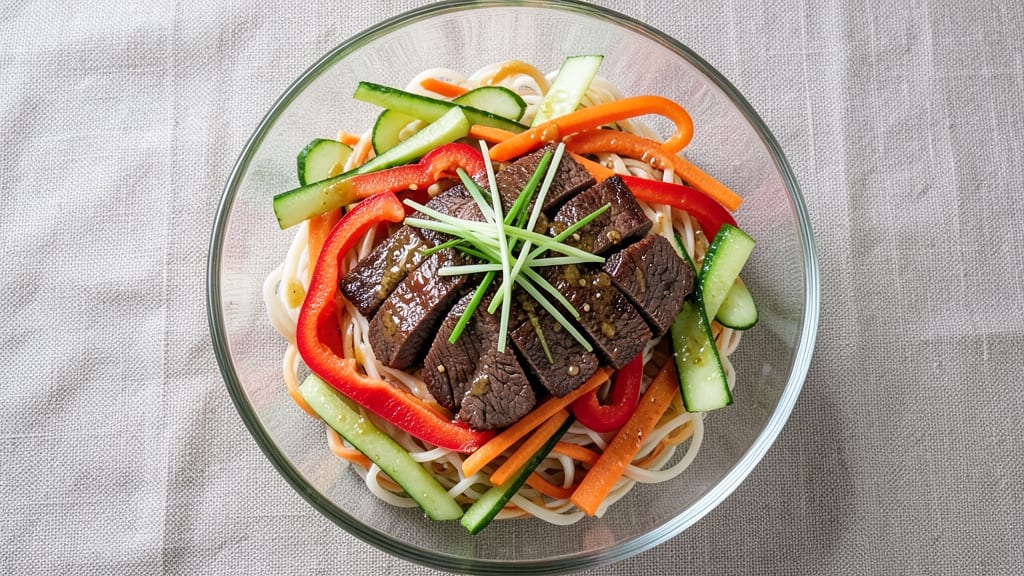
This Asian beef salad recipe delivers the perfect balance of tender beef, crispy noodles, and a sweet-chili dressing that brings bold flavors to every bite. 🌟 The secret lies in marinated beef strips that stay juicy and flavorful, paired with a crunchy mix of rice noodles, fresh vegetables, and a tangy-sweet dressing inspired by Thai cuisine.
It's a complete dish that transforms a simple salad into a restaurant-worthy meal.
The recipe begins with a quick marinade that tenderizes the beef while infusing it with aromatic flavors like garlic, ginger, and soy sauce. Cooked just right, the beef maintains its texture without drying out, ensuring each bite is packed with flavor.
The salad assembly combines crisp rice noodles, fresh herbs, and crunchy toppings that add texture contrast, making every mouthful satisfying and refreshing.
What sets this recipe apart is the sweet-chili dressing—a perfect blend of sweet, tangy, and slightly spicy notes that ties everything together. The combination of tender beef, crisp vegetables, and the vibrant dressing creates a dish that's both hearty and light, ideal for lunch or dinner.
It's a complete meal that requires minimal prep time but delivers maximum flavor.
Serve this Asian beef salad with steamed jasmine rice or warm dumplings to round out the meal. The flavors are balanced and versatile enough to suit any occasion, whether you're preparing a quick weeknight dinner or hosting a gathering with friends. Here's how to make it!
Ingredients for asian beef salad
Tender beef, crisp noodles, and a vibrant sweet-chili dressing create this restaurant-style salad.
| Ingredient | Amount | Notes |
|---|---|---|
| Flank Steak 🥩 | 1 lb | Sliced thinly against grain |
| Rice Noodles 🍜 | 8 oz | Uncooked, medium-width |
| Red Bell Pepper 🌶️ | 1 whole | Thinly sliced, any color |
| Carrot 🥕 | 1 whole | Julienned or matchstick cut |
| Cucumber 🥒 | 1 whole | Seedless, thinly sliced |
| Green Onions 🧅 | 4 whole | Thinly sliced, white and green |
| Fresh Cilantro 🌿 | ¼ cup | Chopped, stems removed |
| Sesame Seeds 🌰 | 1 tbsp | Toasted for garnish |
| Lime 🍋 | 1 whole | Juiced, zest optional |
| Soy Sauce 🥫 | 2 tbsp | Low-sodium preferred |
| Hoisin Sauce 🍶 | 1 tbsp | For sweet depth |
| Sesame Oil 🫒 | 1 tbsp | Toasted for aroma |
| Garlic Cloves 🧄 | 4 cloves | Minced, fresh preferred |
| Fresh Ginger 🌿 | 1 inch | Peeled, grated finely |
| Vegetable Oil 🫒 | 2 tbsp | For cooking beef |
| Brown Sugar 🍚 | 1 tbsp | Light or dark |
| Red Chili Flakes 🌶️ | ½ tsp | Adjust to taste |
| Salt 🧂 | 1 tsp | Kosher or sea salt |
| Black Pepper 🌶️ | ½ tsp | Freshly ground |
The beef is everything here. Flank steak is ideal—lean but tender when sliced thinly against the grain. Look for cuts with good marbling at Whole Foods or your local butcher; the Costco Kirkland brand works well too. If you can't find flank, sirloin or ribeye will work, but slice them extra thin. The rice noodles should be fresh—Thai Kitchen brand is reliable, or check the Asian aisle for pre-soaked packs. For the veggies, seedless cucumbers and crisp carrots are non-negotiable. If you're short on time, pre-cut veggie mixes from the grocery store save steps.
No hoisin sauce? Substitute 1 tbsp of soy sauce plus 1 tsp of honey—it won't be identical, but it works. Short on sesame oil? Avocado oil at half the amount keeps the flavor profile close. The ginger and garlic can be swapped for 1 tsp of ginger powder and 2 cloves of garlic powder if fresh isn't available, but fresh is always better. For extra crunch, add 1/4 cup of crushed peanuts—just toast them lightly in a dry pan first. The dressing keeps for 5 days in the fridge, so make extra for another use.
Prep the beef marinade first—it needs at least 30 minutes to tenderize properly. Store any unused dressing in a sealed jar with a thin layer of olive oil on top to preserve freshness. The salad holds up well for 2 days in the fridge, but the noodles get soggy fast, so assemble just before serving. For leftovers, drain the dressing and store components separately. Re-crisp noodles by tossing with a little sesame oil and warm water for 30 seconds before re-assembling.
Why You'll Love This Recipe
- No Fuss, Big Payoff: I swear by this one—marinate the flank steak overnight (or even 30 minutes if you’re in a rush), slice it thin, and toss it with the noodles. The rest is just chopping crunchy veggies you already have in the fridge. That’s it. No frying, no fuss, just layers of flavor.
- Umami Bomb: The steak? Perfectly balanced—tender but still chewy, with that deep, savory marinade cutting through the fresh crunch of bell pepper and cucumber. Honestly, the first time I made it, I ate half the bowl before I even sat down.
- Lunchbox Hero: Between us, this is my go-to for packed lunches. The noodles hold up for days, the dressing keeps the veggies crisp, and the steak stays juicy. Toss it in a container, grab it on the way out—no sad desk salad here. My coworkers think I’m a genius.
- Budget Win: Flank steak is affordable, rice noodles last forever, and you’re using veggies that won’t spoil. I made this for four people last week and still had leftovers for two more meals. Plus, the marinade is cheap—soy sauce, garlic, a splash of vinegar. No wasted money, all big flavor.
Step-by-step instructions for crunchy Asian beef salad
Here's how to create a perfectly balanced salad with tender beef, crisp vegetables, and a sweet-savory sauce.
🔥 Step 1: Sear the Flank Steak for Maximum Flavor
Slice the 1 lb flank steak thinly against the grain into ¼-inch strips. Heat 2 tablespoons vegetable oil in a large skillet over high heat until shimmering. Add the steak strips in a single layer and sear for 2-3 minutes until the edges are deep golden brown and slightly charred.
Flip the strips and add the 4 cloves minced garlic and 1 inch finely grated ginger. Cook for another 30 seconds until fragrant. Remove the steak and set aside—it'll finish cooking in the salad. The high heat creates that signature smoky sear while keeping the strips tender when sliced thinly.
🍳 Step 2: Prepare the Sweet Chili Sauce
In a small bowl, whisk together 2 tablespoons soy sauce, 1 tablespoon hoisin sauce, 1 tablespoon sesame oil, 1 tablespoon brown sugar, and 0.5 teaspoon red chili flakes. Taste and adjust—you want a balance of sweet, salty, and subtle heat. Set aside while you prepare the remaining ingredients.
This sauce ties everything together. The hoisin adds depth, the brown sugar caramelizes slightly when tossed with warm noodles, and the chili flakes bring just enough heat without overpowering. Keep it at room temperature until ready to use.
👨🍳 Step 3: Cook and Toss the Rice Noodles
Bring a pot of water to a rolling boil and add the 8 oz rice noodles. Cook for 2-3 minutes until just tender—rice noodles cook faster than you'd expect. Drain immediately and rinse under cold water to stop the cooking process. Toss the noodles with 1 tablespoon sesame oil to prevent sticking.
Here's the thing—rice noodles should be al dente when they hit the salad. Overcooking makes them mushy. Spread them on a plate and let them cool slightly while you prepare the vegetables. The slight coolness helps them hold their shape when tossed with warm beef.
🥘 Step 4: Assemble the Crunchy Vegetable Mix
In a large bowl, combine the 1 whole thinly sliced red bell pepper, 1 whole julienned carrot, 1 whole thinly sliced cucumber, and 4 whole thinly sliced green onions. Sprinkle with 1 teaspoon salt and toss gently. Let sit for 5 minutes to draw out excess moisture, then drain any liquid that collects in the bowl.
The vegetables need to stay crisp, not soggy. This draining step is crucial—it prevents your salad from turning into a watery mess. Keep the vegetables separate from the noodles until the final assembly to maintain their texture.
🍽️ Step 5: Combine Everything for Perfect Balance
In a large serving bowl, combine the cooked rice noodles, drained vegetables, and seared steak strips. Pour the prepared sauce over everything and toss gently with tongs. Let it sit for 1-2 minutes so the flavors meld together. Garnish with 0.25 cup chopped fresh cilantro and 1 tablespoon toasted sesame seeds. Serve immediately with wedges of the 1 whole lime for extra zing.
The final salad should have a perfect balance—tender beef, crisp vegetables, chewy noodles, and a glossy, flavorful sauce. Each bite should deliver a mix of textures and temperatures, with the lime juice cutting through the richness when squeezed at the table. Serve with extra sesame seeds on the side for those who want more crunch.
Pro Tips For Making Asian Beef Salad
- SLICE THIN AND REST: Flank steak needs patience—slice it against the grain into ¼-inch strips, but don’t serve it immediately. Let it sit 5–10 minutes after cooking, covered loosely with foil. I learned this the hard way: serving it straight from the pan makes the meat tougher, and you’ll regret every bite.
- SOAK NOODLES JUST ENOUGH: Rice noodles turn mushy if you over-soak them. Drop them in warm (not boiling) water for 5–7 minutes, then drain and rinse with cold water to stop cooking. They’ll soften further when tossed with dressing, but this keeps them from falling apart like wet cardboard.
- SAUTE PEPPERS AND CARROTS TOO: Skip the raw crunch? Don’t. Quickly sear sliced red bell peppers and carrots in the same pan as the beef (2–3 minutes) until just tender. The caramelized edges add depth, and the veggies won’t turn to mush when tossed with the dressing later.
- DRESSING LAST, NOT FIRST: Tossing noodles with dressing before adding beef or veggies makes everything soggy. Instead, mix the dressing separately and drizzle it over the salad right before serving. If you’re worried about wilted cucumbers, add them last—cold and crisp.
Common mistakes when making this dish
Overcooking Beef Strips
Thinly sliced beef strips cook faster than you think—just 2-3 minutes in a hot pan. I’ve seen many people walk away and let them sit too long, turning tender meat into dry, chewy rubber.
Keep the heat high and flip frequently to ensure even cooking without overdoing it. Remove them when they reach 145°F internal temperature—they’ll finish cooking in the salad. 🔥
Skipping the Marinade
Some folks skip marinating the beef entirely, but that’s a big mistake. The soy sauce, garlic, and ginger in the marinade not only tenderize the meat but also infuse flavor deep into the fibers.
I recommend marinating for at least 30 minutes—overnight works even better. Without it, your beef will taste bland and lack the aromatic depth that makes this salad truly special.
Overcooking Noodles
Rice noodles are delicate and cook faster than pasta—just 2-3 minutes in boiling water. Overcooking them turns them into a mushy mess that ruins the salad’s texture. Drain immediately and rinse with cold water to stop the cooking process.
Toss them with a little sesame oil to keep them from sticking and maintain their bite. 🍜
Draining Vegetables Improperly
Many people skip the 5-minute draining step for the vegetables, leading to a soggy salad. The salt draws out excess moisture, and draining it ensures your greens and veggies stay crisp.
Use a colander or paper towels to remove any liquid that collects in the bowl. This small step makes a huge difference in texture—trust me, your salad will thank you!
Using Old Ingredients
Freshness is key, especially with ingredients like cilantro, lime, and sesame seeds. Wilted herbs or dried-out seeds can turn a vibrant salad into a sad one. Buy cilantro just before making the salad, and store lime wedges in the fridge until serving.
For sesame seeds, toast them fresh in a dry pan to maximize their nutty aroma and crunch. 💫
Ignoring the Resting Time
After tossing everything together, resist the urge to dig in immediately. Let the salad sit for 1-2 minutes so the flavors meld and the sauce coats the ingredients evenly. This short wait allows the beef to reabsorb any juices and ensures every bite is cohesive.
Skipping this step means missing out on the full depth of flavor the dish has to offer.
Nutrition facts
Frequently asked questions
Can I use ground beef instead of flank steak?
Ground beef works in a pinch, but the texture will be different. For best results, use 80/20 lean-to-fat ratio ground beef and shape it into small patties to mimic strips. Cook until 160°F internal temperature to ensure safety. The flavor will be heartier but less tender than thinly sliced flank steak.
How do I make this salad spicier?
Add 1 extra teaspoon of red chili flakes to the sauce or include 1/4 cup of sliced Thai chilies in the salad. For heat lovers, mix in 1 tablespoon of sriracha with the dressing. Always taste first—Asian cuisine balances heat with sweetness, so adjust gradually.
What's the best way to store leftovers?
Store components separately in airtight containers for up to 2 days. Keep the dressing in a sealed jar with a layer of oil on top. Re-crisp noodles by tossing with warm water and sesame oil for 30 seconds before re-assembling. The beef and vegetables stay fresh longer when not mixed with dressing.
Can I make this gluten-free?
Yes! Replace soy sauce with tamari or coconut aminos (1:1 ratio) and check hoisin sauce labels for gluten. Use gluten-free rice noodles and verify all ingredients. The flavor profile remains similar, though tamari has a slightly different umami depth. Always double-check labels on packaged ingredients.
What's the best side dish pairing?
Serve with steamed jasmine rice or warm dumplings to round out the meal. For a lighter option, add miso soup or edamame. The salad's bold flavors pair beautifully with mild, neutral dishes that let the beef shine.