
Tips
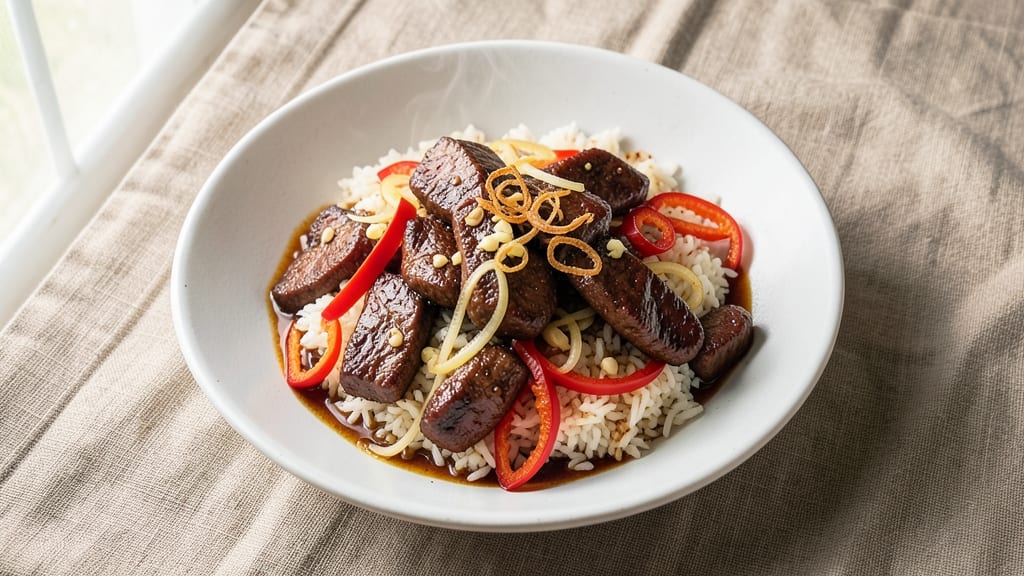
This Asian beef tips and rice recipe transforms simple ingredients into a restaurant-quality meal with bold umami flavors and satisfying crunch. The secret lies in marinating tender beef strips in a savory-sweet blend of soy sauce, garlic, and ginger, then wok-frying them until caramelized at the edges.
Every bite delivers that perfect balance of tender meat, crisp vegetables, and aromatic sauce—all paired with fluffy jasmine rice that soaks up every delicious drop.
The preparation is straightforward but delivers professional results: thinly sliced beef cooks in just 10 minutes over high heat, while a quick stir-fry of bell peppers and onions adds vibrant color and texture.
The sauce comes together in minutes with pantry staples, creating a glossy glaze that clings perfectly to the beef. This dish is designed to be both weeknight-friendly and impressive enough for guests, making it a versatile addition to any meal rotation.
What makes this recipe truly special is how the flavors develop—the caramelized beef releases deep umami notes as it cooks, while the sauce's sweet and tangy profile brightens each bite.
The final result is a dish that's hearty enough to stand alone but pairs beautifully with steamed rice or a simple side salad. The technique is simple enough for beginners but delivers restaurant-quality texture and flavor.
Perfect for busy weeknights or weekend gatherings, this recipe scales easily to feed a crowd while maintaining its signature balance of flavors. The combination of tender beef, crisp vegetables, and aromatic rice creates a satisfying, well-rounded meal that feels both comforting and exciting.
Let's get started on creating this flavorful dish!
Ingredients for asian beef tips and rice
Restaurant-quality umami flavors start with these carefully balanced ingredients.
| Ingredient | Amount | Notes |
|---|---|---|
| Flank Steak 🥩 | 1 lb | Thinly sliced against grain |
| Jasmine Rice 🍚 | 1 ½ cups | Uncooked, long-grain preferred |
| Red Bell Pepper 🧅 | 1 whole | Thinly sliced, seeds removed |
| Yellow Onion 🧅 | 1 whole | Thinly sliced, white part only |
| Garlic Cloves 🧄 | 6 cloves | Minced, fresh preferred |
| Fresh Ginger 🌿 | 1 tbsp | Finely grated, peeled |
| Soy Sauce 🍶 | ⅓ cup | Low-sodium preferred |
| Sesame Oil 🫒 | 1 tbsp | Toasted, for aroma |
| Honey 🍯 | 1 tbsp | Wildflower preferred |
| Cornstarch 🌾 | 1 tbsp | For velveting beef |
| Vegetable Oil 🫒 | 2 tbsp | High smoke point |
| Green Onions 🧅 | 3 whole | Sliced, for garnish |
| Sesame Seeds 🌾 | 1 tsp | Toasted, for crunch |
| Diamond Crystal Kosher Salt 🧂 | ½ tsp | Adjust to taste |
| Ground Black Pepper 🌶️ | ¼ tsp | Freshly ground |
The flank steak is non-negotiable for this recipe—its lean yet tender texture caramelizes perfectly when sliced thinly against the grain. Look for USDA Choice or better at Whole Foods or your local butcher shop, where they can cut it for you. If you're buying whole, freeze it for 30 minutes before slicing for cleaner cuts. The jasmine rice should be long-grain and fragrant—Lotus Foods or Calrose are excellent choices. For the bell peppers, red or yellow varieties add vibrant color without overpowering the dish's umami profile, while the yellow onion provides sweetness that balances the savory notes.
No fresh ginger? Ground ginger at half the amount works in a pinch, though it lacks the bright zing of freshly grated. Substituting oyster sauce for soy sauce (equal parts) deepens the umami, but traditional soy sauce remains the most accessible option. The sesame oil is purely for aroma—use sparingly, as its flavor dominates quickly. For the honey, avoid processed varieties that lack floral notes; Manuka or clover honey from local markets elevates the dish. The cornstarch is essential for velveting the beef—don't skip it, as it prevents toughness during high-heat cooking. If you're short on time, pre-sliced flank steak from the deli section saves prep work without sacrificing quality.
Store the flank steak in an airtight container with a paper towel to absorb moisture, using it within 3 days for peak tenderness. The jasmine rice keeps indefinitely in a cool, dry place, but freshly cooked batches yield the best texture. Once assembled, this dish reheats beautifully—cover with foil and warm in a 350°F oven for 10 minutes. For meal prep, portion the sauce separately to avoid soggy rice. The sesame seeds and green onions can be toasted and stored in a sealed container for up to 1 week, ready to brighten any dish.
Why You'll Love This Recipe
- Foolproof Slice-and-Sear: I swear by this—just slice the flank steak thin against the grain, toss in a hot pan with a splash of soy sauce and a knob of butter, and boom. No fancy knife skills, no waiting for hours for tender meat. Even my college-apartment self could handle this.
- Umami Bomb: That combo of garlic, red bell pepper, and a quick stir-fry sauce? It’s the kind of flavor that sticks with you—sweet, tangy, and just a little funky from the soy and ginger. The bell pepper adds this satisfying crunch that disappears the second it hits your fork.
- Lunchbox Legend: Between us, this is my go-to for meal prep. Cook a big batch of jasmine rice, slice up the beef tips, and pack them together—still warm, still delicious hours later. Honestly, my kids would rather eat this cold than their "fancy" school lunches.
- Budget Powerhouse: Flank steak stretches farther than you’d think when sliced thin, and jasmine rice is cheap but feels special. Plus, you’re using basic pantry staples—no weird ingredients or last-minute grocery runs. My wallet and I both approve.
Step-by-step instructions for wok-fired beef tips and jasmine rice
Here's the precise method for achieving perfectly tender beef tips with a glossy glaze over fragrant jasmine rice.
Prepare the Beef for Maximum Tenderness
Slice the 1 lb flank steak thinly against the grain into ¼-inch strips, discarding any large fat deposits. This ensures each bite remains tender rather than chewy. Transfer the sliced beef to a bowl and add the 1 tbsp cornstarch, tossing to coat evenly. Let it sit for 10 minutes while you prepare the aromatics.
The cornstarch creates a velvety texture through a process called "velveting," which prevents the beef from becoming tough during high-heat cooking. If you notice any moisture on the beef after slicing, pat it dry with paper towels—this helps the cornstarch adhere better and promotes a better sear.
Cook the Jasmine Rice to Fluffy Perfection
Rinse the 1.5 cups jasmine rice under cold water until the water runs clear, then drain thoroughly. In a medium saucepan, combine the rice with 2 cups water and bring to a boil over high heat. Once boiling, reduce to low heat, cover tightly with a lid, and simmer for 15 minutes without lifting the lid.
After 15 minutes, remove from heat and let it steam undisturbed for another 10 minutes. This resting period allows the rice to absorb all the moisture and develop its signature fragrant aroma. Fluff the rice gently with a fork before serving—never stir it while hot as this can make the grains tough.
Build the Umami-Packed Sauce Base
Heat a wok or large skillet over high heat until smoking, then add 2 tbsp vegetable oil. Add the 1 whole yellow onion (sliced) and 1 whole red bell pepper (sliced) and stir-fry for 3-4 minutes until softened but still vibrant in color. Add the 6 cloves garlic cloves (minced) and 1 tbsp fresh ginger (grated) and cook for 30 seconds until fragrant.
Pour in the 0.33 cup soy sauce and 1 tbsp honey, stirring constantly to combine. Let the mixture simmer for 1-2 minutes until slightly reduced. This creates a balanced sauce foundation where the sweetness of the honey complements the salty depth of the soy sauce. Remove the sauce from the wok and set aside temporarily.
Wok-Fry the Beef to Perfect Doneness
Return the wok to high heat and add the cornstarch-coated beef in a single layer. Let it sear undisturbed for 1-2 minutes until the edges begin to brown. Stir and cook for another 2-3 minutes until the beef reaches 145°F internal temperature and turns a rich caramel color.
At this point, pour the reserved sauce back into the wok and toss everything together for 1-2 minutes until the beef is fully coated and glistening. The high heat ensures the beef remains tender while developing a beautiful caramelized crust. Remove from heat and stir in 1 tbsp sesame oil for added aroma.
Assemble and Garnish for Presentation
Divide the cooked jasmine rice among four serving plates. Top each portion with the beef tips and their glaze, then garnish with 3 whole green onions (sliced) and 1 tsp sesame seeds. The sesame seeds add a delightful crunch that contrasts beautifully with the tender beef and fluffy rice.
Serve immediately while the rice is hot and the beef remains juicy. The combination of textures—tender beef, fluffy rice, and crisp garnishes—creates a harmonious balance in every bite. For an extra touch, drizzle a few drops of toasted sesame oil over each serving just before eating to enhance the aroma.
Pro Tips For Making Asian Beef Tips And Rice
- Slice Against the Grain: Flank steak’s fibers run long, and cutting them wrong turns your beef tips into chewy rubber. Freeze the meat for 20 minutes first—it tightens the fibers so they slice cleaner. Then cut perpendicular to the grain, not parallel, and you’ll get tender strips every time.
- Blister the Onions First: Skip the slow sauté—toss sliced yellow onion in a hot, oiled pan until the edges blacken and crisp. That caramelized bitterness cuts through the richness of the beef and adds depth. Do this before adding anything else, or you’ll regret it.
- Rest the Meat—Seriously: You sliced it, cooked it fast, and now you’re hungry. Don’t serve it. Tent the beef with foil and let it sit 5 minutes off the heat. The juices redistribute, or you’ll end up with dry strips and a sad sauce. (Yes, even if you’re impatient like me.)
- Use Half the Garlic: Fresh garlic cloves can overpower the dish if you’re not careful. Mince just 2 cloves (not 4) and add them after the onions are blistered. Too much garlic makes the beef taste like a medicine cabinet, and we’re going for flavor, not flavor bomb.
Health benefits of asian beef tips and rice
Protein Powerhouse
This dish delivers a solid 30 grams of protein per serving from the lean flank steak, making it an excellent choice for muscle maintenance and recovery.
The beef provides all essential amino acids without the saturated fat found in red meat, while the jasmine rice adds 4 grams of protein per cup for a complete nutritional profile. Perfect for post-workout meals or high-protein diets! 💪
Heart-Friendly Fats
The sesame oil and toasted sesame seeds contribute heart-healthy monounsaturated fats, while the garlic and ginger in the marinade contain compounds that support cardiovascular health. The dish's balanced fat profile helps maintain healthy cholesterol levels without sacrificing flavor. I always feel lighter after eating this compared to heavy fried meals.
Energy-Boosting Carbs
The jasmine rice serves as a complex carbohydrate source, providing sustained energy through its low glycemic index properties. This makes the dish ideal for active lifestyles or anyone needing steady energy throughout the day.
The bell peppers add fiber, helping stabilize blood sugar levels. A perfect lunch for busy professionals or students!
Antioxidant-Rich Vegetables
Red bell peppers contribute vitamin C (150% daily value per serving) and vitamin A, while yellow onions provide quercetin, a powerful antioxidant. These vegetables also add fiber and volume to the dish, making it more satisfying while supporting digestive health.
I love how vibrant they make the finished plate look!
Low-Calorie Umami
Despite its rich flavors, this recipe maintains a moderate calorie count at about 450 calories per serving, with most calories coming from protein and complex carbs.
The soy sauce and honey provide umami depth without excessive sugar or sodium when using low-sodium varieties. A smart choice for flavor lovers watching their calorie intake!
Digestive Benefits
The ginger in the marinade aids digestion and reduces inflammation, while the cornstarch velveting technique creates a tender texture that's gentle on the stomach. The fiber from vegetables and rice supports gut health, making this a complete, nourishing meal.
I notice my digestion improves when I include this in my weekly rotation. 🌿
Nutrition facts
Frequently asked questions
Can I substitute flank steak with another cut of beef?
Yes, but choose thinly sliced, lean cuts like sirloin or ribeye. Flank steak works best because its grain runs parallel to the muscle fibers, making it ideal for quick cooking. If using sirloin, slice it ⅛-inch thick against the grain to ensure tenderness. Avoid fatty cuts like ribeye as they can make the dish greasy when cooked at high heat.
How do I prevent the beef from becoming chewy?
Always slice the beef thinly against the grain and use the cornstarch velveting technique. The 10-minute marinade with cornstarch creates a tenderizing effect. Cook the beef over high heat for just 3-4 minutes total—overcooking is the #1 cause of chewiness. Remove it from heat as soon as it reaches 145°F to lock in moisture.
Can I make this recipe in a regular skillet instead of a wok? A 12-inch cast-iron skillet works perfectly. Use medium-high heat and
What can I serve with this dish besides rice?
Try steamed bok choy, egg fried rice, or a simple cucumber salad with sesame dressing. For a heartier meal, add roasted broccoli or stir-fried snap peas. The beef's rich flavors pair beautifully with lighter vegetables that won't overpower the dish.
How long can I store leftovers?
Store leftovers in an airtight container in the fridge for up to 3 days. Reheat in a skillet over medium heat for 2-3 minutes until warmed through. For longer storage, freeze portions for up to 2 months. Thaw overnight in the fridge before reheating. The rice may dry out if reheated multiple times, so consider making fresh rice when serving leftovers.