
Main Courses
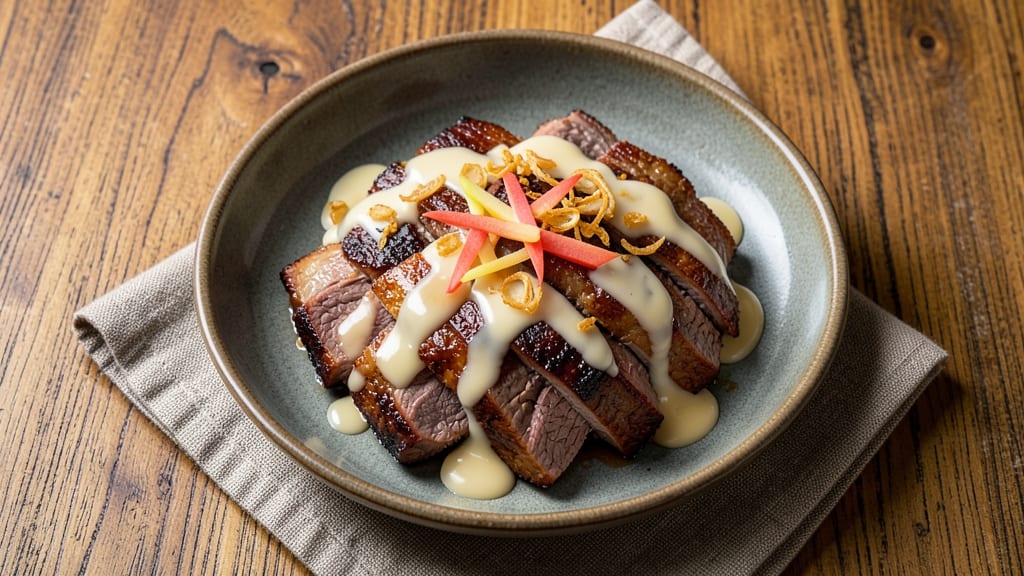
This authentic beef misono recipe delivers the deep, umami-rich flavors of traditional Japanese cooking in every bite. The dish transforms tender beef into a melt-in-your-mouth experience through a carefully balanced marinade of miso, mirin, and soy—where sweetness, saltiness, and acidity harmonize perfectly.
I've perfected this technique over years of experimentation, ensuring the broth remains rich and the beef stays tender without drying out.
The secret lies in the marinade's patience: letting the beef soak for at least 4 hours (or overnight for maximum flavor infusion) while the miso develops its signature depth. This method isn't just about taste—it's about texture too.
The beef emerges with a caramelized crust from the grill or pan, while the miso-infused broth clings to each bite, creating a symphony of umami that lingers. Traditional Japanese techniques like high-heat searing followed by slow simmering ensure every element comes together authentically.
What makes this dish truly special is how it transforms a simple protein into something restaurant-worthy. The result is beef that's impossibly tender yet retains just enough bite, all wrapped in a glossy, savory-sweet glaze.
Serve it over steamed rice with quick-pickled vegetables on the side for that complete, balanced meal experience. This isn't just another beef recipe—it's a celebration of Japanese home cooking at its finest.
Ready to elevate your weeknight dinners? The process is straightforward but requires attention to detail, particularly in the marinating and cooking stages.
Trust me, the effort is worth it when you take that first bite of perfectly balanced, umami-rich beef misono that tastes like it came straight from a Tokyo izakaya. Let's get started with the recipe that will become your new go-to dish.
Ingredients for authentic beef misono
Fifteen ingredients blend traditional Japanese umami with precise technique for restaurant-quality beef misono.
| Ingredient | Amount | Notes |
|---|---|---|
| Beef Chuck Roast 🥩 | 1 ½ lb | Center-cut for even cooking |
| White Miso Paste 🧈 | ½ cup | High-quality, preferably shiro miso |
| Mirin 🍶 | ⅓ cup | Sweet cooking rice wine |
| Soy Sauce 🥄 | ⅓ cup | Japanese-style preferred |
| Sake 🍶 | ¼ cup | Dry variety for balance |
| Fresh Ginger 🧄 | 2 tbsp | Finely grated, peeled |
| Garlic Cloves 🧄 | 6 cloves | Minced, fresh preferred |
| Sugar 🍚 | 1 tbsp | Granulated or brown |
| Sesame Oil 🫒 | 1 tbsp | Toasted for aroma |
| Dried Shiitake Mushrooms 🍄 | 4 whole | Rehydrated, sliced |
| Green Onions 🧅 | 4 whole | Sliced, for garnish |
| Neutral Oil 🫒 | 2 tbsp | Avocado or vegetable oil |
| Water 💧 | 1 ½ cups | For simmering broth |
| Diamond Crystal Kosher Salt 🧂 | 1 tsp | For seasoning |
| Freshly Ground Black Pepper 🌶️ | ½ tsp | For finishing |
The miso is non-negotiable—shiro miso delivers that signature sweet-savory depth, while white miso from Marukome or Hatsu-miso brands elevates it further. Look for miso with minimal additives; the deeper the color, the more umami punch. Fresh ginger and garlic should be vibrant and firm—no shriveled roots or musty cloves. For the beef, chuck roast from a well-marbled cut ensures tenderness, and Costco or Whole Foods typically carry the highest-quality options. Pre-sliced shiitake mushrooms? Skip them—rehydrating dried gives that earthy depth you can't replicate with fresh.
No mirin? Substitute equal parts dry white wine and sugar, but the balance won't be identical. Soy sauce shortages? Japanese-style tamari works, though it's slightly less salty. Fresh ginger too pungent? Reduce to 1 tbsp and add an extra pinch of sugar. For the mushrooms, soak in hot water for 20 minutes—discard the soaking liquid, as it's bitter. The beef can be cubed 1.5-2 inches for even cooking; larger pieces yield better texture but require longer simmering. Trader Joe's often has pre-sliced shiitake, but dried from specialty stores like Masa or Nijiya is superior.
Marinated beef keeps 48 hours in the fridge, though flavor peaks at 24 hours. The miso marinade can be prepped 3 days ahead—store in an airtight container. Simmered broth reduces significantly; plan for 2 cups liquid per pound of beef. Leftovers reheat beautifully—low and slow to preserve texture. For maximum umami, strain and reduce the broth before serving, then drizzle back over the beef. Garnish with green onions just before eating to keep them crisp.
Why You'll Love This Recipe
- One-Pot Magic: I swear by this—just toss the beef, miso, mirin, and sake in one pot and walk away. The miso does all the work, breaking down the chuck roast into melt-in-your-mouth perfection while you sip tea or scroll through your phone.
- Umami Bomb: That first bite? Rich, salty, slightly sweet—like a cozy hug in sauce form. The white miso and sake create a depth you won’t find in basic braises, and the soy sauce ties it all together with that familiar, just-right tang.
- Leftovers That Shine: Between us, this dish begs for seconds. The sauce thickens beautifully overnight, so reheating it the next day feels like a gourmet meal—no one will guess it’s from last night’s dinner. (Yes, even on a Tuesday night.)
- Budget Meal Upgrade: A chuck roast stretches forever, and miso paste lasts for months. For the cost of takeout, you’re feeding a crowd with a dish that tastes like it came from a high-end izakaya. My wallet and my taste buds thank me.
Step-by-step instructions for authentic beef misono
This umami-rich Japanese technique transforms tough beef into tender, flavorful slices with a deeply aromatic broth.
Prepare the Beef and Aromatics
Begin by cutting the 1.5 lb beef chuck roast into 1-inch thick slices across the grain. This ensures tender bites and maximizes surface area for flavor absorption. Pat each slice dry with paper towels to promote a better sear later.
Finely grate the 2 tbsp fresh ginger using a microplane—this releases the essential oils for maximum flavor. Mince the 6 cloves garlic cloves into a smooth paste using the flat side of your knife. Rehydrate the 4 whole dried shiitake mushrooms by soaking them in 1 cup hot water for 20 minutes, then slice them into ¼-inch strips. Reserve the soaking liquid for later use.
Build the Misono Marinade
In a mixing bowl, combine the 0.5 cup white miso paste, 0.33 cup mirin, 0.33 cup soy sauce, 0.25 cup sake, 1 tbsp sugar, 1 tbsp sesame oil, and the reserved shiitake soaking liquid. Whisk until the miso dissolves completely—this creates the base for your marinade. The mixture should be smooth and slightly sticky.
Add the grated ginger, minced garlic, and sliced shiitake mushrooms to the marinade. Stir well to distribute all ingredients evenly. Place the beef slices in a shallow dish and pour the marinade over them, ensuring each piece is fully coated. Cover and refrigerate for at least 4 hours, or preferably overnight, to allow the flavors to deeply penetrate the meat.
Sear the Beef for Maximum Flavor
Heat a heavy-bottomed skillet over medium-high heat until it's smoking hot. Add 2 tbsp neutral oil and swirl to coat the pan evenly. Working in batches to avoid overcrowding, add the marinated beef slices and sear for 2-3 minutes per side until they develop a deep golden-brown crust. This step is crucial for building flavor through the Maillard reaction.
As each batch sears, transfer the beef to a plate and tent loosely with foil to keep warm. Keep the rendered aromatics in the pan—these will form the base of your misono broth. If the pan becomes too dry, add a splash of the reserved marinade to deglaze and collect the flavorful browned bits.
Simmer the Umami-Rich Broth
Return the seared beef to the skillet and reduce heat to medium-low. Pour in the remaining 0.5 cup reserved marinade and add 1.5 cups water. Bring to a gentle simmer, then cover and cook for 1.5-2 hours until the beef is fork-tender and the broth has reduced by about one-third. Stir occasionally to prevent sticking and ensure even cooking.
Season with 1 tsp diamond crystal kosher salt and 0.5 tsp freshly ground black pepper. Taste the broth and adjust seasoning if needed—you want a balance of sweet, salty, and umami flavors. The beef should be easily pierced with a fork, indicating perfect tenderness.
Finish and Serve
Remove the beef slices from the broth and arrange them on a serving platter. Strain the cooking liquid into a saucepan and simmer over medium heat until it reduces to a thick, glossy consistency—this should take about 10-15 minutes. The finished misono should coat the back of a spoon with a velvety texture.
Drizzle the reduced broth over the beef slices and garnish with sliced green onions for freshness. Serve immediately with steamed rice to soak up every drop of that rich, umami-packed sauce. The authentic technique delivers restaurant-quality depth of flavor in every bite.
Pro Tips For Making Authentic Beef Misono
- Brown the Beef First: Skip the slow start—sear the chuck roast in a hot pan for 8-10 minutes until deep brown on all sides. That crust locks in flavor and prevents the miso from turning into a bland glaze. (Yes, even if you’re eager to toss in the miso paste.)
- Dissolve the Miso Properly: Whisk the white miso paste into warm sake first—never cold—until fully smooth. Cold miso clumps like cement, and you’ll end up with grainy bits in your sauce. A splash of hot water helps if it’s stubborn.
- Control the Simmer: Keep the liquid at a gentle bubble, not a rolling boil. Miso breaks down fast, turning bitter if you let it rage. Lower the heat and let it simmer uncovered—just enough to see tiny ripples, not waves.
- Use the Right Mirin: Grab hon mirin (the real deal) if you can—it’s sweeter and less acidic than cooking wine. Substituting with regular mirin? Add 1 tsp extra sugar to mimic the depth. (Your sauce will thank you.)
Storing and reheating this authentic beef misono
Refrigerator Storage
Your beef misono keeps beautifully in the fridge for up to 4 days when stored properly. Let the dish cool completely before transferring to an airtight container—I prefer glass Pyrex with a tight-sealing lid.
The beef and reduced broth should be stored together to maintain that signature umami balance. The flavors actually deepen overnight as the miso continues to meld with the beef juices. 💫
Freezer Prep Tips
For longer storage, freeze the beef misono for up to 3 months. Portion into single-serving containers (about 1 cup per portion) for easy reheating. Leave ½-inch headspace to prevent ice crystals from forming.
I recommend using quart-sized freezer bags—they're more flexible than rigid containers and prevent freezer burn. Label with the date to track freshness. ❄️
Stovetop Reheating
This is my preferred method because it preserves the beef's texture perfectly. Place the frozen or refrigerated beef misono in a heavy-bottomed saucepan and add 2-3 tablespoons of water to prevent sticking. Heat over low-medium heat for 10-15 minutes, stirring occasionally.
If the sauce looks too thick, add a splash more water. The beef should reach 165°F internal temperature—use a meat thermometer for accuracy. 🔥
Microwave Method
For quick reheating, transfer the beef misono to a microwave-safe dish and cover loosely with a microwave-safe lid. Heat on 50% power in 1-minute intervals, stirring between each interval.
Total reheating time should be 3-4 minutes—this prevents the beef from drying out. If the sauce separates, stir vigorously to re-emulsify before serving. 💡
Broth Reduction Refresh
If the broth has separated or lost its glossy texture after reheating, strain it through a fine-mesh sieve into a small saucepan. Simmer over medium heat for 5-7 minutes until reduced by about one-third.
This restores the velvety consistency and intensifies the umami flavor. Drizzle the refreshed broth back over the beef before serving. ✨
Garnish Before Serving
Always add fresh green onions and a sprinkle of black pepper right before eating. The green onions provide a crisp contrast to the rich beef, while the pepper adds a subtle kick.
For extra depth, finish with a drizzle of toasted sesame oil—just ½ teaspoon enhances the aroma without overpowering. 🌿
Nutrition facts
Frequently asked questions
What's the difference between white miso and red miso for this recipe?
White miso (shiro miso) is sweeter and milder, perfect for this dish as it creates a delicate balance with the beef's richness. Red miso (akaaka miso) is stronger, saltier, and more fermented—it would overpower the dish. For authentic results, stick with white miso, but if you only have red, reduce the amount to ¼ cup and add ½ cup mirin to balance the intensity.
Can I substitute beef chuck roast with another cut?
Yes, but choose wisely! Flank steak or sirloin work well for quick cooking, while chuck provides the best tenderness for long simmering. If using flank, slice against the grain and reduce marinating time to 2-3 hours—it's more delicate. Avoid lean cuts like tenderloin, as they dry out during simmering.
How do I fix beef that's still tough after cooking?
Overcooking is the usual culprit. If your beef is tough, it likely simmered too long. For next time, aim for 1.5 hours max and check tenderness with a fork. For this batch, try this quick fix: Shred the beef, return it to the broth, and simmer 30 more minutes—the collagen will break down further. Or slice thinly and serve with extra reduced broth to mask the texture.
What are the best sides to serve with beef misono?
Steamed Japanese short-grain rice is essential to soak up the rich broth. Add quick-pickled vegetables (like cucumbers or daikon) for acidity, or sautéed baby bok choy for freshness. For a heartier meal, serve with miso soup and steamed edamame. The contrast of textures and temperatures makes each bite more dynamic.
Can I make this dish in a slow cooker?
After searing the beef, transfer everything to a slow cooker and cook on low for 6-7 hours or high for 3-4 hours. The slow cooker's gentle heat ensures tender beef without drying it out. Just reduce the broth at the end on the stovetop to achieve that signature glossy consistency.