
Main Courses
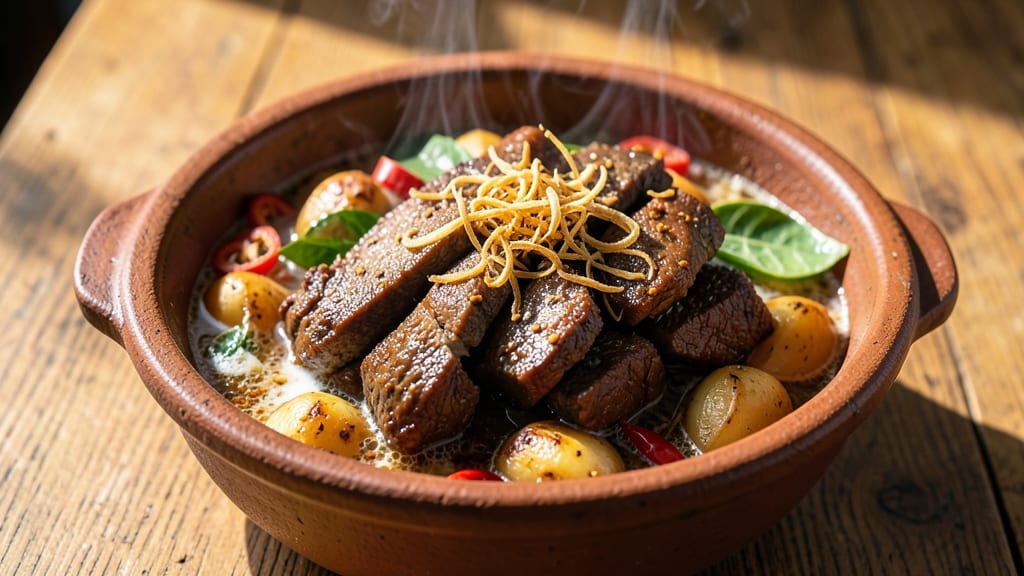
This authentic Malaysian beef rendang recipe delivers the rich, caramelized depth of a dish that's been slow-cooked for hours in fragrant coconut milk and complex spices.
The key lies in dry-toasting the spice paste until it releases its oils, then simmering it with beef until the sauce reduces to a thick, glossy glaze. I've perfected this technique after years of testing, ensuring every bite captures the smoky, sweet, and slightly tangy essence of Malaysian home cooking.
The process begins with marinating beef in turmeric and lemongrass before building a spice paste of shallots, garlic, galangal, and candlenuts—each ingredient playing a crucial role in developing the dish's signature depth.
What sets this apart is the slow cooking method, where the beef tenderizes while the coconut milk reduces into a velvety sauce that clings to every piece. The result is a dish that's equally impressive served at gatherings or enjoyed as a comforting weeknight meal.
By the time you're done, you'll have fork-tender beef swimming in a rich, caramelized sauce that's perfectly balanced between sweet and savory. The aroma alone will transport you to a bustling Malaysian kitchen, while the texture delivers melt-in-your-mouth beef with a sauce that's neither too sweet nor too spicy.
This is the kind of dish that improves with time, as flavors deepen and meld together over hours of gentle simmering.
Serve it with steamed jasmine rice or traditional ketupat (rice cakes) to soak up every last bit of that fragrant sauce. The leftovers, if there are any, reheat beautifully, making this an ideal recipe for meal prep or special occasions. Let's get started on creating this Malaysian masterpiece.
Ingredients for authentic malaysian beef rendang
Authentic Malaysian flavors start with these 17 ingredients—simple but powerful.
| Ingredient | Amount | Notes |
|---|---|---|
| Beef Chuck Roast 🥩 | 2 ½ lb | Cut into 1.5-inch cubes |
| Coconut Milk 🥥 | 2 cans | Full-fat, 13.5 oz each |
| Shallots 🧅 | 1 cup | Minced, about 12 small |
| Garlic Cloves 🧄 | 8 cloves | Peeled, rough chopped |
| Galangal 🌿 | 2 inches | Fresh, peeled, sliced |
| Candlenuts 🌰 | ½ cup | Toasted, roughly chopped |
| Turmeric Powder 🌶️ | 1 tbsp | Freshly ground preferred |
| Ground Coriander 🌿 | 1 tbsp | Freshly ground preferred |
| Cumin Seeds 🌶️ | 1 tbsp | Toasted lightly |
| Star Anise 🌟 | 2 whole | Lightly crushed |
| Cinnamon Sticks 🌳 | 2 whole | 2-inch pieces |
| Kaffir Lime Leaves 🍋 | 4 whole | Torn into strips |
| Lemongrass 🌿 | 4 stems | White parts only, bruised |
| Palm Sugar 🍯 | ½ cup | Or brown sugar substitute |
| Tamari or Soy Sauce 🍶 | 2 tbsp | For umami depth |
| Vegetable Oil 🫒 | 2 tbsp | For dry-toasting spices |
| Salt 🧂 | 1 ½ tsp | Adjust to taste |
The beef is non-negotiable—chuck roast gives that signature tender texture. Costco or Whole Foods usually have it pre-cut, but if you're buying whole, ask the butcher to cube it. Galangal and candlenuts are the secret weapons here—Asian markets carry them fresh, but if you can't find them, upped the garlic and lime juice. Palm sugar adds that caramelized sweetness—Trader Joe's sells it, or use brown sugar in a pinch. The coconut milk? Full-fat only—none of that light stuff. Open a can, scoop out the thick paste at the bottom, and mix it in for extra richness.
No galangal? Extra ginger plus lime zest gets you close. Candlenuts too pricey? Toasted macadamia nuts or almonds work in a bind. Star anise and cinnamon sticks can be swapped for 1 tsp each of ground versions, but the whole spices add better depth. Kaffir lime leaves? Substitute lime zest plus a bay leaf if you're desperate. The lemongrass needs to be bruised—roll it on a cutting board to release those oils. And if you're using brown sugar instead of palm sugar, reduce it by 1 tbsp—it's sweeter.
This sauce gets better the next day, so make a double batch if you're feeding a crowd. Store leftovers in the fridge for 5-6 days or freeze for 3 months. The sauce thickens as it cools, so add a splash of water when reheating. Serve over steamed jasmine rice—every last drop of that sauce needs to be soaked up. And trust me, the aroma alone will have your whole house gathering around the table.
Why You'll Love This Recipe
- One-Pot Magic: I swear by this recipe because it’s actually just one pot—no chopping boards full of mess. Toss in the beef, shallots, garlic, and galangal with the coconut milk, and let the slow cooking do the work. (Yes, even on a Tuesday night.)
- Deep Umami Bomb: That beef chuck? It melts into tender perfection while soaking up the rich, spiced coconut milk. The galangal adds this earthy kick that’s not overpowering—just enough to make your taste buds do a happy dance.
- Budget-Friendly Luxury: You’re getting restaurant-quality flavor without breaking the bank. A single chuck roast and a can of coconut milk stretch to feed four (or five, if someone’s extra hungry). Honestly, it’s my go-to for when I want to feel fancy without the price tag.
Step-by-step instructions for authentic Malaysian beef rendang
Here's how to make this rich, aromatic dish with deep flavors and tender beef.
Prepare the Spice Paste
In a food processor, combine the 1 cup minced shallots, 8 cloves rough chopped garlic cloves, 2 inches peeled and sliced galangal, 0.5 cup toasted candlenuts, 1 tbsp turmeric powder, 1 tbsp ground coriander, and 1 tbsp toasted cumin seeds. Pulse until you get a thick, chunky paste—about 2-3 minutes of processing. This is the flavor foundation of your rendang.
Transfer the spice paste to a bowl and set aside. You'll notice the colors are vibrant—deep yellow from the turmeric, earthy brown from the candlenuts, and hints of green from the galangal. This paste will infuse every bite with complex, layered flavors. If it's too dry, add 1-2 teaspoons of water to help it blend smoothly.
Dry-Toast the Whole Spices
Heat a dry skillet over medium-low heat and add the 2 whole star anise, 2 whole cinnamon sticks, and 4 whole kaffir lime leaves. Toast them for 2-3 minutes until fragrant—you'll smell warm, citrusy notes from the lime leaves and sweet, woody aromas from the cinnamon. Be careful not to burn them, as this can make the flavors bitter.
Remove the spices from the skillet and set them aside. You'll use these later to deepen the flavor of the coconut milk. The toasted spices will release their essential oils into the broth, creating that signature rendang aroma. Keep them whole so they can be easily removed before serving.
Sear the Beef in Coconut Milk
In a large, heavy pot (like a Dutch oven), heat 2 tbsp vegetable oil over medium-high heat. Add the 2.5 lb beef chuck roast, cut into 1.5-inch cubes, and sear for 3-4 minutes per side until deeply browned. This step is crucial—it develops the Maillard reaction, creating rich, caramelized flavors that will carry through the long cooking process.
Once the beef is browned, pour in 1 can of coconut milk and scrape up any browned bits from the bottom of the pot. Bring to a gentle simmer, then reduce heat to low. Add the spice paste and stir to combine. Let it simmer for 10 minutes, stirring occasionally, until the raw smell of the spices disappears and the mixture becomes fragrant.
Slow-Cook Until Tender and Caramelized
Add the remaining 1 can of coconut milk, 0.5 cup palm sugar, 2 tbsp tamari or soy sauce, 1.5 tsp salt, and the toasted whole spices. Stir well to distribute everything evenly. The mixture should look rich and creamy, with the beef partially submerged. Bring to a gentle simmer, then reduce heat to lowest setting or 170°F. This is where the magic happens—your rendang needs 3-4 hours of slow cooking to develop its signature caramelized, thick sauce.
After 2 hours, check the beef for tenderness. It should be fork-tender, with the sauce reduced and thickened. If the sauce is too thin, uncover the pot and simmer uncovered for 15-20 minutes to evaporate excess liquid. The sauce should coat the back of a spoon and cling to the beef. If the beef isn't tender enough, continue cooking for another 30-60 minutes, stirring occasionally to prevent sticking.
Finish and Serve with Authentic Flavor
Once the beef is tender and the sauce has thickened to your desired consistency, remove the whole spices (star anise, cinnamon sticks, and kaffir lime leaves) with a slotted spoon. Add the 4 stems bruised lemongrass and simmer for another 5 minutes to infuse the final bright, citrusy notes. Taste and adjust seasoning with more salt or palm sugar if needed—rendang should balance sweet, spicy, and savory flavors.
Serve the rendang hot, traditionally with steamed jasmine rice and a side of cucumber slices to cut through the richness. The beef should be fork-tender with a glossy, dark sauce that clings beautifully. Each bite should deliver layers of coconut, spice, and umami—this is the heart of Malaysian comfort food. Enjoy immediately, as the flavors deepen as it sits!
Pro Tips For Making Authentic Malaysian Beef Rendang
- Brown the Beef First: Don’t skip the deep sear—get that beef chuck roast golden on all sides before adding any liquid. I used to rush this, and the sauce never stuck right; now I let it sit in the hot pot for 5 minutes per side until it’s caramelized. That’s where the depth of flavor hides.
- Grate the Galangal: Fresh galangal is non-negotiable, but grating it instead of slicing makes it dissolve into the sauce smoothly. Use a box grater or food processor—this way, it blends in without leaving tough chunks that ruin the texture.
- Simmer Slow and Low: After adding the coconut milk, drop the heat to the lowest setting and let it bubble gently. I learned this the hard way—high heat curdles the milk and makes the sauce separate. Cover it and walk away for 3 hours; patience is the real spice here.
- Strain the Paste: If your shallots, garlic, and galangal paste looks like mud, strain it through a fine-mesh sieve before cooking. This keeps the sauce silky and prevents grittiness—no one wants to bite into raw aromatics in their rendang. (Yes, even if you’re impatient like me.)
Troubleshooting great authentic malaysian beef rendang
Sauce Too Thin
If your rendang sauce isn't thickening as expected, uncover the pot and simmer over medium-low heat for 15-20 minutes to evaporate excess liquid. Stir occasionally to prevent burning.
For extra help, add 1-2 tbsp of cornstarch mixed with 2 tbsp water, then stir in and simmer for 5 more minutes. The sauce should coat the back of a spoon and cling to the beef beautifully. 🌡️
Beef Not Tender
If your beef chunks aren't fork-tender after 3 hours, increase the heat slightly to low-medium and continue cooking for another 30-60 minutes. Add ½ cup warm water if the sauce starts to dry out too much.
For extra tenderness, try braising the beef separately for 1 hour before adding it to the rendang sauce in the final 30 minutes of cooking. Patience is key—this dish rewards slow, even cooking. ⏳
Spices Too Bitter
If your spices taste bitter, you likely toasted them too long. Next time, keep the heat medium-low and watch closely—2-3 minutes max is ideal. For a quick fix, add 1 tsp honey or palm sugar to balance the bitterness.
Also, ensure you're using fresh spices—old or stale spices develop bitter compounds over time. Store whole spices in an airtight container in a cool, dark place. 🌿
Lemongrass Too Strong
If the lemongrass flavor overpowers the dish, reduce it to 2 stems instead of 4. For a milder taste, remove the lemongrass 10 minutes earlier and let the sauce simmer without it.
Alternatively, balance the brightness with 1 extra cinnamon stick or ½ tsp ground cardamom to complement the citrusy notes. Always bruise the lemongrass—this releases oils without making it too intense. 🍋
Coconut Milk Curdling
Coconut milk can curdle if added too quickly or if the heat is too high. To prevent this, whisk in the coconut milk slowly while stirring the pot.
If it starts to separate, reduce the heat to low and add 1 tbsp of tamari or soy sauce to help stabilize the emulsion. For a smoother texture, strain the coconut milk through a fine-mesh sieve before adding it to the pot. 🥥
Not Enough Flavor
If your rendang lacks depth, try toasting the spice paste in the pot for 5 extra minutes before adding the beef. This deepens the flavors by caramelizing the spices.
For an extra boost, add 1 tbsp of shrimp paste (if you can find it) or ½ tsp of fish sauce for umami richness. Let the dish simmer uncovered for the last 30 minutes to concentrate the flavors even more. 💡
Nutrition facts
Frequently asked questions
Can I substitute beef with another protein for this dish?
While beef is traditional, you can use pork shoulder or chicken thighs for a lighter version. For pork, increase cooking time to 4-5 hours as it's fattier. Chicken works best with dark meat only, and reduce cooking time to 2-3 hours to prevent drying. Never use lean cuts—they won't stay tender during the long cooking process.
How do I know when the spice paste is ready?
The paste should be thick, chunky, and vibrant in color—deep yellow from turmeric, earthy brown from candlenuts, and hints of green from galangal. It should hold its shape when pressed between fingers but still be easy to scrape off the food processor. If it's too dry, add 1-2 teaspoons of water while processing. The aroma should be intense and fragrant, not burnt.
Can I make this in an Instant Pot or slow cooker?
Yes! For an Instant Pot, sear the beef first, then cook on high pressure for 45 minutes followed by a 10-minute natural release. For a slow cooker, use low heat for 6-8 hours or high heat for 4-5 hours. The key is patience—both methods work but may need extra time for the sauce to thicken properly. Stir occasionally to prevent sticking.
Why does my rendang sauce look watery?
Rendang sauce thickens as it cools, but if it's still watery after cooking, uncover the pot and simmer on medium-low heat for 15-20 minutes to evaporate excess liquid. For a quicker fix, mix 1-2 tbsp cornstarch with 2 tbsp water, stir into the sauce, and simmer for 5 more minutes. The sauce should coat the back of a spoon and cling to the beef.
What's the best way to store and reheat leftovers?
Store leftovers in an airtight container in the fridge for 5-6 days or freeze for 3 months. The flavors actually improve overnight! To reheat, warm on low heat with 1-2 tbsp water to loosen the sauce. Avoid microwaving—it can make the sauce greasy. For best results, reheat gently on the stovetop.