
Soups & Stews
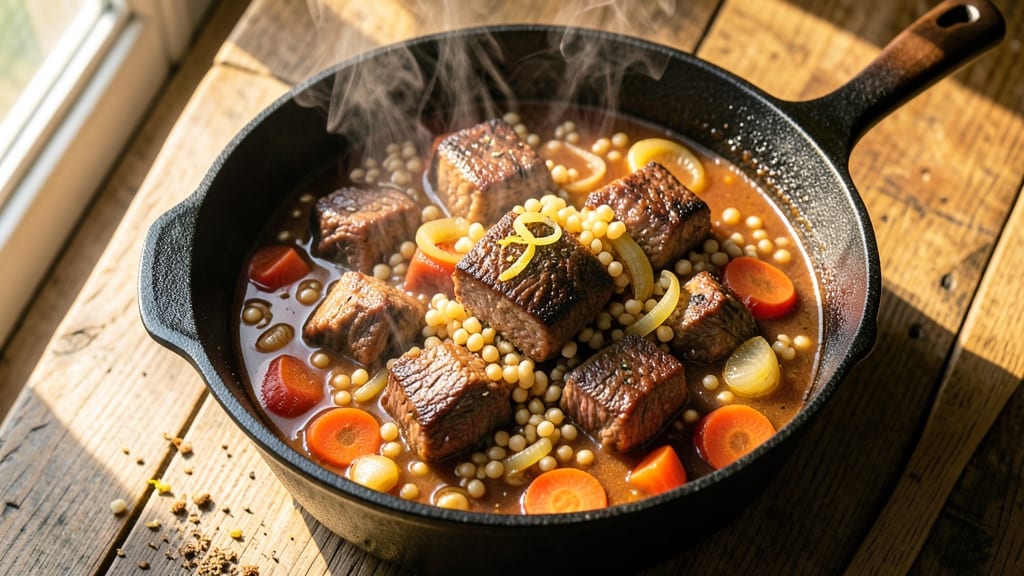
This beef and barley stew recipe transforms tough cuts into melt-in-your-mouth perfection with just a stovetop and patience. The secret lies in slow simmering—where tough beef shoulder dissolves into tender strands while barley absorbs rich, savory broth.
I’ve perfected this method over years of testing, ensuring every bite delivers that deep, caramelized flavor without requiring an oven or pressure cooker.
What sets this recipe apart is the browning step—searing the beef creates a flavorful crust that dissolves into the broth, while deglazing the pan captures every drop of meaty essence.
Pearl barley adds hearty texture and natural thickening power, turning this into a one-pot meal that only gets better as it simmers. The result? A stew so satisfying, it becomes the centerpiece of any meal.
By the time you’re done, you’ll have a fork-tender beef stew with golden barley, aromatic herbs, and a broth so rich it coats every spoonful. The aroma alone will have everyone gathering around the table, and the leftovers?
Even more flavorful the next day. This is comfort food at its finest—warm, hearty, and impossible to resist.
Pair it with crusty bread to soak up the broth or serve alongside roasted vegetables for a complete meal. The beauty of this recipe is its versatility—simple enough for weeknights but impressive enough for company. Let’s get started on creating this stovetop masterpiece.
Ingredients for beef and barley stew recipe stove top
Six hearty ingredients transform tough beef into velvety perfection through slow stove-top alchemy.
| Ingredient | Amount | Notes |
|---|---|---|
| Beef Chuck Roast 🥩 | 3 lb | Cut into 1.5-inch cubes, trimmed of fat |
| Pearl Barley 🌾 | 1 cup | Rinsed thoroughly before cooking |
| Yellow Onion 🧅 | 1 whole | Diced, medium size |
| Carrots 🥕 | 4 whole | Peeled, cut into 1-inch chunks |
| Garlic Cloves 🧄 | 6 cloves | Minced, fresh preferred |
| Tomato Paste 🍅 | ½ cup | Smooth, not chunky |
| Dry Red Wine 🍷 | 1 cup | Bold variety like Cabernet Sauvignon |
| Beef Broth 💧 | 4 cups | Low-sodium preferred |
| Fresh Thyme 🌿 | 2 sprigs | Leaves only, stems removed |
| Fresh Rosemary 🌿 | 1 sprig | Needles only, finely chopped |
| Bay Leaves 🍃 | 2 whole | Dried, standard size |
| All-Purpose Flour 🌾 | 1 tbsp | For deglazing |
| Kosher Salt 🧂 | 1 ½ tsp | Diamond Crystal preferred |
| Ground Black Pepper 🌶️ | 1 tsp | Freshly ground |
| Olive Oil 🫒 | 2 tbsp | Extra-virgin for richness |
The beef selection is non-negotiable—chuck roast from a trusted butcher delivers the best marbling and connective tissue for tender results. Costco or Whole Foods carry excellent cuts, but any reputable grocery store with a meat counter will have suitable options. Look for vibrant red color and visible fat marbling, which ensures flavor and moisture during cooking. If you're buying a whole roast, ask your butcher to cube it for you—1.5-inch pieces are ideal for even cooking. Fresh thyme and rosemary from the grocery store's produce section will elevate the aroma, but dried herbs work in a pinch at half the quantity. For tomato paste, Mutti or Barilla brands provide the smoothest texture without excess acidity.
No beef chuck roast? Chuck steak or even short ribs will work, though cooking times may vary slightly. Substituting wine? Dry sherry or even extra beef broth maintains depth without altering the flavor profile significantly. Fresh herbs unavailable? Dried thyme and rosemary are essential—skip them at your peril, but use one-third the amount of fresh. The pearl barley should be rinsed thoroughly to remove excess starch that could make the stew gummy. For a quicker version, quick-cooking barley reduces simmering time by about 20 minutes. The tomato paste can be replaced with crushed tomatoes if preferred, though it will add more liquid to the stew.
This stew tastes even better the next day as flavors meld, so make a double batch if possible. Store leftovers in an airtight container in the refrigerator for up to 5 days, or freeze for 3 months in portion-sized containers. For reheating, use low heat on the stovetop with a splash of water or broth to restore moisture. The barley will thicken the broth naturally, so no additional thickening agents are needed. If serving for company, prepare the stew ahead and reheat gently—the aroma alone will draw everyone to the table. For a restaurant-quality touch, garnish with fresh parsley and serve with crusty bread to soak up every last drop of rich broth.
Why You'll Love This Recipe
- One-Pot Magic: I swear by this recipe when I’m too tired to wash another pan. Just brown the beef, toss in chopped onions and carrots, add barley and broth, and let it simmer—no extra dishes, no stress. The barley thickens right in the pot, so you’re left with one container to clean.
- Deep, Savory Richness: That beef chuck roast melts into tender, juicy strands while the barley soaks up all the flavor. The garlic cloves, lightly toasted in the oil first, add a warm, aromatic punch that makes every bite feel like a hug. Honestly, the first time I made it, I forgot to take a photo because I was too busy eating.
- Weeknight Workhorse: Between us, this is my go-to when I need to feed a crowd but don’t want to slave over the stove. Double the recipe, and you’ve got leftovers for lunch the next day—or freeze half for when life gets busy. My college-aged son actually asks for it now, which is basically a parenting win.
- Budget-Friendly Powerhouse: A chuck roast stretches farther than you’d think, and pearl barley is one of the cheapest pantry staples out there. I’ve made this stew for under $1.50 per serving, and no one ever complains about the taste. It’s the kind of meal that makes grocery bills feel less painful.
Step-by-step instructions for beef and barley stew
This method delivers restaurant-quality depth with simple stove-top techniques.
Sear the Beef Chuck Roast for Maximum Flavor
Heat the 2 tablespoons olive oil in a heavy Dutch oven over medium-high heat until shimmering. Working in batches to avoid crowding, add the 3 lb beef chuck roast cut into 1.5-inch cubes, trimmed of fat. Sear each piece for 2-3 minutes per side until deeply browned and caramelized.
The key here is patience—don't rush the searing. You want those Maillard reactions happening to build rich, meaty flavor. Once all pieces are browned, transfer them to a plate and set aside. The residual heat will carry through the cooking process, ensuring tender meat rather than tough.
Develop the Aromatic Base with Onions and Carrots
In the same Dutch oven, add the diced yellow onion and 1-inch carrot chunks. Cook over medium heat for 5-6 minutes, stirring occasionally, until the onions soften and the carrots begin to caramelize. Add the 6 minced garlic cloves and cook for another 30 seconds until fragrant.
This step forms the flavor foundation of your stew. The onions should be translucent but not browned, and the carrots should just begin to soften. If they stick, add a splash of beef broth to deglaze. The goal is to build layers of flavor without burning the vegetables.
Build Depth with Wine, Tomato Paste, and Herbs
Pour in the 1 cup dry red wine and scrape up any browned bits from the bottom of the pot with a wooden spoon. Let the wine simmer for 2-3 minutes until reduced by half. Stir in the ½ cup tomato paste, 1 tablespoon all-purpose flour, 1.5 teaspoons kosher salt, and 1 teaspoon ground black pepper.
The wine reduction intensifies the flavor, while the tomato paste adds richness and body. The flour helps thicken the stew slightly as it simmers. Add the 2 sprigs fresh thyme, 1 sprig fresh rosemary, and 2 whole bay leaves now—their aromatics will infuse the stew as it cooks.
Simmer the Stew to Fork-Tender Perfection
Return the seared beef to the pot along with the 4 cups beef broth. Bring to a gentle boil, then reduce heat to low and cover partially. Let the stew simmer for 2.5 hours, stirring occasionally, until the beef is fork-tender and falls apart easily.
This long, slow cook time is critical for achieving that melt-in-your-mouth tenderness. Check the liquid level occasionally and add a splash of water or broth if it reduces too much. The barley will absorb liquid as it cooks, so you want to maintain enough moisture for even cooking.
Add Barley and Finish with Caramelized Carrots
About 30 minutes before the stew is fully cooked, add the 1 cup rinsed pearl barley and the remaining 3 peeled, 1-inch carrot chunks. Simmer uncovered for the final 30 minutes to allow the barley to absorb the flavors and the carrots to caramelize slightly.
Taste and adjust seasoning if needed—the stew should be rich, savory, and well-balanced. The barley should be tender but still have a slight bite. If the stew is too thick, add a splash of broth or water to reach your desired consistency. Serve hot with crusty bread to soak up every last bit of that tender beef and barley.
Pro Tips For Making Beef And Barley Stew Recipe Stove Top
- Sear the Chuck Hard: I learned this the hard way—skipping the sear means flavorless stew. Get that beef chuck roast screaming hot in a dry pot for 4-5 minutes per side until it’s deep brown, almost black in spots. The crust locks in juices and builds the stew’s foundation, so don’t rush it.
- Cut Barley Evenly: Pearl barley varies wildly in size, and uneven pieces mean some turn to mush while others stay rock-hard. Soak it first if you’re short on time, but if you’re cooking dry, sort it by hand—pick out the tiny bits or save them for soups. Aim for ¼-inch pieces for consistent texture.
- Deglaze Aggressively: That browned beef crust is packed with flavor, so don’t just splash in liquid and stir. Scrape the bottom with a wooden spoon while pouring in the broth, wine, or beer—get every last bit off the pan. I know it’s messy, but it’s the thing that matters most for depth of flavor.
- Simmer Low and Long: This isn’t a race. After the initial sear and simmer, drop the heat to the lowest setting that keeps a gentle bubble—no rolling boil. Too much heat turns barley mushy and toughens the beef. Three hours is the minimum; four or five makes it melt-in-your-mouth tender. (Yes, even if you’re impatient like me.)
Perfect pairings for this recipe
Crusty Bread Pairing
Nothing enhances this stew like a warm, crusty loaf to soak up the rich broth. I recommend a baguette or sourdough from your local bakery—look for one with a thick, crisp crust that can handle the hearty flavors.
Toast it lightly in the oven for 3-5 minutes at 375°F to bring out its nutty undertones. The contrast between the chewy bread and tender beef creates the perfect bite. 🥖
Roasted Root Vegetables
For a complete meal, serve alongside roasted carrots, parsnips, and potatoes. Toss 1 lb mixed root vegetables in 1 tbsp olive oil, ½ tsp smoked paprika, and ½ tsp salt, then roast at 400°F for 30-35 minutes until caramelized.
Their earthy sweetness complements the stew’s savory depth.
Simple Green Salad
A bright, acidic salad balances the stew’s richness. Toss 4 cups mixed greens (arugula, spinach, or romaine) with 1 tbsp lemon vinaigrette (olive oil + lemon juice + Dijon mustard).
Add ¼ cup toasted walnuts for crunch and a sprinkle of Parmesan cheese for umami. The freshness cuts through the stew’s heartiness beautifully. 🥗
Creamy Mashed Potatoes
For a comforting contrast, serve with garlic mashed potatoes. Boil 2 lbs Yukon Gold potatoes until tender, then mash with 4 tbsp butter, ½ cup warm milk, 2 minced garlic cloves, and ½ tsp salt. The velvety texture pairs perfectly with the stew’s robust flavors.
Wine Pairing
A bold Cabernet Sauvignon or Syrah complements the stew’s depth, while a Pinot Noir offers a lighter option. For non-alcoholic, try sparkling apple cider—its acidity cleanses the palate between bites. Avoid heavy reds like Malbec, which can overpower the dish. 🍷
Cheese Board Finisher
End the meal with a cheese board featuring aged cheddar, brie, and sharp gouda. Add dried apricots, walnuts, and honey** for sweetness. The salty, creamy, and sweet notes create a satisfying finale that echoes the stew’s complexity. 🧀
Nutrition facts
Frequently asked questions
Can I use a different cut of beef instead of chuck roast?
Yes! Chuck steak or short ribs work well, though cooking times may vary. Short ribs add extra richness but require 3-4 hours of simmering. For faster results, try brisket (cut into 1-inch cubes) or even stew meat from the grocery store. Just ensure the pieces are 1.5 inches or smaller for even cooking.
Why does my stew taste bland after simmering?
Bland stews usually lack acidity, salt, or fat. Boost flavor by adding 1 tbsp red wine vinegar or lemon juice at the end, or adjust with extra salt and black pepper. Browning the beef properly and deglazing the pan are critical—those caramelized bits pack serious flavor. If needed, finish with 1 tsp Worcestershire sauce for umami depth.
How do I make this stew faster on the stovetop?
Use quick-cooking barley (cuts 20-30 minutes off simmering time) and smaller beef pieces (1-inch cubes instead of 1.5-inch). Increase heat to medium-high for the first 30 minutes, then reduce to low. For 2-hour prep, skip the wine reduction and add it later, or use pre-minced garlic/onions to save chopping time.
Can I make this stew in a regular pot instead of a Dutch oven?
A heavy-bottomed pot (like enameled cast iron) works perfectly. Dutch ovens retain heat better, but any pot with a lid will do. Just monitor liquid levels more closely—regular pots may evaporate faster. For best results, use a pot with a 2-3 quart capacity for 6 servings. The key is maintaining a gentle simmer rather than a rolling boil.
What's the best way to reheat leftovers?
Reheat gently on the stovetop over low heat with 2-3 tbsp water or broth to restore moisture. Avoid microwaving—it can make the barley mushy. For extra richness, stir in 1 tsp butter or 1 tbsp cream while reheating. Leftovers actually improve as flavors meld! Store in an airtight container for up to 5 days or freeze for 3 months.