
Main Courses
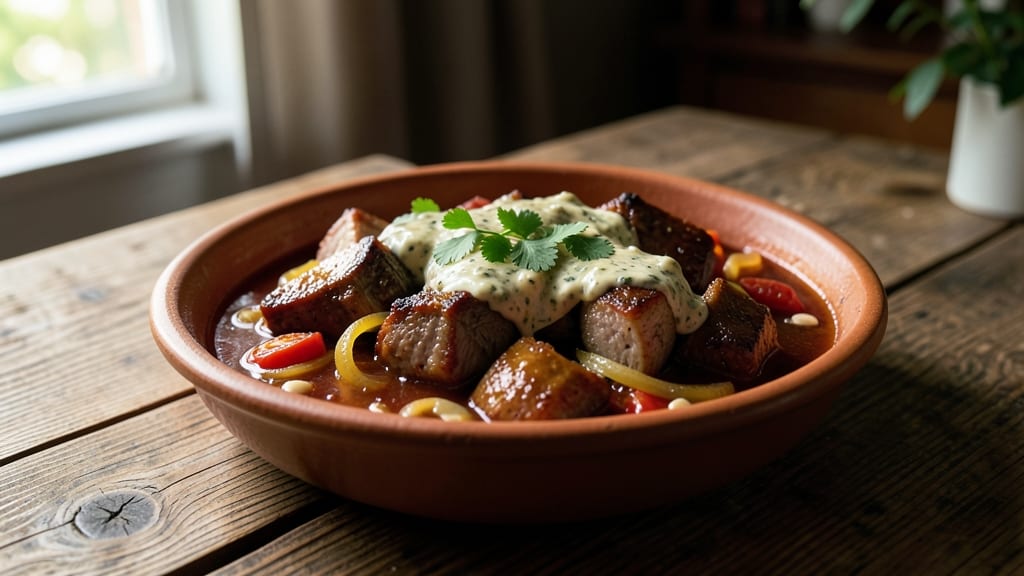
This beef and pork caldereta recipe brings the rich, slow-simmered comfort of Filipino home cooking to your table—where tender meat melts into a deep, aromatic sauce infused with tomatoes, vinegar, and just the right amount of heat. 🔥 I first tasted caldereta during a trip to Manila, where my family insisted I try it at their favorite carinderia, and now it's become a staple in my kitchen for feeding a crowd.
The magic lies in the balance of sweet and tangy flavors, achieved through careful layering of ingredients and hours of gentle simmering.
What sets this recipe apart is the foolproof technique of browning the meat first, which builds deep, caramelized flavors that form the foundation of the sauce.
Unlike quick weeknight dishes, caldereta rewards patience—each hour of simmering transforms tough cuts into fork-tender perfection while developing a sauce that's rich yet never heavy. The combination of beef and pork creates a textural contrast that makes every bite satisfying, while the vinegar and tomatoes create that signature tangy-sweet harmony.
By the time you serve this dish, you'll have a restaurant-quality caldereta that's hearty enough for a family dinner but elegant enough for company. The sauce clings to perfectly cooked rice, creating a dish that's both comforting and impressive.
The aroma alone—spiced with bay leaves, garlic, and black pepper—will have everyone gathering at the table before the meal is even ready.
Serve it with steamed white rice to soak up every bit of that flavorful sauce, or pair it with crusty bread for a more rustic touch. This recipe scales beautifully, so double the batch if you're feeding a crowd.
The leftovers, if there are any, reheat even better the next day—proof that good food only gets better with time.
Ingredients for beef and pork caldereta
Sixteen ingredients, hours of simmering, and a table full of happy eaters.
| Ingredient | Amount | Notes |
|---|---|---|
| Chuck Roast 🥩 | 2 lb | Cut into 1.5-inch cubes |
| Pork Shoulder 🐖 | 2 lb | Cut into 1.5-inch cubes |
| Yellow Onions 🧅 | 2 whole | Thickly sliced |
| Garlic Cloves 🧄 | 8 cloves | Minced |
| Canned Tomatoes 🍅 | 2 cans | 28 oz each, crushed by hand |
| Red Wine 🍷 | 1 cup | Dry variety like Cabernet Sauvignon |
| White Vinegar 🍶 | ½ cup | Distilled preferred |
| Tomato Paste 🍅 | 2 tbsp | Squeeze tube or canned |
| Bay Leaves 🌿 | 2 whole | Dried, crushed slightly |
| Black Peppercorns 🌶️ | 1 tsp | Freshly cracked |
| Ground Cinnamon 🌶️ | ½ tsp | For warmth |
| Salt 🧂 | 2 tsp | Kosher or sea salt |
| Olive Oil 🫒 | ¼ cup | Extra-virgin for browning |
| Fresh Thyme 🌿 | ¼ cup | Leaves only, chopped |
| Potatoes 🥔 | 2 lb | Waxy variety, peeled and sliced |
The meat is where this dish shines. Chuck roast gives you that melt-in-your-mouth texture, while pork shoulder adds juiciness. Grab them from the butcher counter if you can—Whole Foods or local markets often have better cuts than the grocery store. Look for good marbling in both. If you're short on time, pre-cut cubed beef and pork from Costco works perfectly. The potatoes? Russets or Yukon Golds hold up best to the long cooking time. Don't skip peeling them—they'll turn to mush otherwise.
No red wine? Substitute with beef broth plus a splash of balsamic vinegar—it's what I do when I'm out. Fresh thyme is ideal, but dried works at half the amount. For the tomato paste, those little squeeze tubes at Trader Joe's are a lifesaver—no waste, and they keep forever. The bay leaves? Crush them slightly between your palms before adding to release the oils. And if you're worried about the vinegar making the dish too sour, don't be—it mellows out completely during the long simmer. Trust me on that.
This dish tastes even better the next day, so make extra if you can. The sauce keeps for 5 days in the fridge, and the meat? Even better reheated. For serving, I like to portion it into containers with rice—one meal-prep container per serving—so lunches are sorted for the week. Freezes beautifully too, for up to 3 months. Just thaw overnight in the fridge before reheating.
Why You'll Love This Recipe
- One-Pot Magic: Between us, this dish is the kind of meal where you dump everything in one pot—no fancy prep, no extra pans—and walk away. The chuck roast and pork shoulder practically melt into tender perfection while you sip your coffee or scroll through your phone.
- Tomato-Garlic Hug: That canned tomato base might seem simple, but when it simmers with onions, garlic, and a few spices, it turns into a rich, velvety sauce that clings to every bite. Honestly, the first time I tasted it, I nearly licked the spoon clean.
- Leftovers That Win: Here’s what sold me—this recipe actually improves the next day. The flavors meld deeper, the meat gets even more tender, and I’ve reheated portions for lunch without a single complaint. (Yes, even from my picky teenager.)
- Budget Crowd-Pleaser: A chuck roast and pork shoulder stretch across multiple meals without breaking the bank, and the onions and garlic add layers of flavor for pennies. I’ve served this to friends, family, and even my in-laws—no one ever asks for takeout after.
Step-by-step instructions for beef and pork caldereta
Let's create this rich, slow-cooked Filipino classic with tender meats and aromatic spices.
🔥 Step 1: Brown the Meat in Olive Oil
Heat the 0.25 cup olive oil in a large Dutch oven over medium-high heat. Add the 2 lb chuck roast and 2 lb pork shoulder (cut into 1.5-inch cubes) in batches, working in batches if needed. Don't overcrowd the pan—this ensures proper browning. Let the meat sear for 4-5 minutes per side until deeply golden brown and crispy in spots.
Here's the thing—you want that deep, caramelized crust on the meat. It's what builds all that rich flavor in the sauce. If the meat releases easily from the pan, it's ready to move. Transfer the browned meat to a plate and set aside. The remaining browned bits in the pan will become the flavor base for your caldereta.
🍳 Step 2: Sauté Onions and Garlic
In the same Dutch oven, add the 2 whole yellow onions (thickly sliced) and cook over medium heat for 5-6 minutes until softened and starting to caramelize at the edges. Stir occasionally so they brown evenly. You'll see the onions turn from pale to golden—this adds sweetness to the dish.
Add the 8 cloves minced garlic and cook for 30 seconds until fragrant. Don't let it burn—garlic turns bitter quickly. Here's where it gets good: pour in the 1 cup red wine and scrape up all those delicious browned bits from the bottom of the pan. Let the wine simmer for 2-3 minutes until reduced by half.
🥘 Step 3: Build the Flavorful Base
Stir in the 2 tbsp tomato paste and cook for 1 minute until it darkens slightly. Add the 2 cans crushed tomatoes, 0.5 cup white vinegar, 2 whole bay leaves (crushed slightly), 1 tsp cracked black peppercorns, 0.5 tsp ground cinnamon, and 2 tsp salt. Stir well to combine all ingredients.
Return the meat to the pot, along with any accumulated juices. Bring the mixture to a gentle boil, then reduce heat to low. Cover and let it simmer for 1 hour. This is where the magic happens—the flavors meld together and the meat becomes fork-tender. Stir occasionally to prevent sticking, but don't worry about over-stirring at this stage.
🥘 Step 4: Add Potatoes and Thyme
After the initial 1 hour of simmering, add the 2 lb waxy potatoes (peeled and sliced) and 0.25 cup chopped fresh thyme. Stir gently to distribute the potatoes evenly throughout the sauce. The potatoes should absorb the rich flavors while adding a satisfying texture contrast to the tender meats.
Continue simmering uncovered for another 30-40 minutes until the potatoes are tender and the sauce has thickened to your desired consistency. You're looking for a sauce that coats the back of a spoon but still has some body to it. If it's too thin, let it simmer uncovered for a few more minutes to reduce.
⏰ Step 5: Adjust and Serve
Taste the caldereta and adjust seasoning if needed. You might need a bit more salt or a splash of vinegar to balance the flavors. The dish should be rich, slightly tangy from the vinegar, and well-seasoned with the spices.
Let the caldereta rest for 10 minutes before serving. This allows the flavors to meld even more and makes serving easier. Serve hot with steamed rice to soak up all that delicious sauce. The combination of tender beef and pork with the creamy potatoes in a rich, spiced tomato sauce makes this dish truly special.
Pro Tips For Making Beef And Pork Caldereta
- Sear the Meat First: I learned this the hard way—skipping the sear means flavorless stew. Brown both the chuck roast and pork shoulder in batches (yes, it’s messy) until deep golden. That crust locks in juices and builds the base for the rich tomato sauce that defines caldereta.
- Blanch the Onions: Toss sliced yellow onions into boiling water for 30 seconds, then shock in ice water. They’ll soften faster and caramelize without burning, which is crucial when you’re layering flavors with garlic and tomatoes. (Your future self will curse you if you skip this.)
- Don’t Rush the Tomatoes: After adding canned tomatoes, simmer uncovered for at least 15 minutes—let that liquid reduce and deepen. I used to rush this, and the sauce always tasted thin and underdeveloped. Patience here makes the difference between good and great caldereta.
- Deglaze with Vinegar: After browning the meat, hit the pan with ¼ cup white vinegar (or a splash of red wine) while scraping up those fond bits. It cuts through the richness and brightens the sauce—trust me, it’s the upgrade I never knew I needed. (Sounds weird, but it works.)
Flavor customization for this beef and pork caldereta
Spice Level Control
This classic recipe has built-in warmth from black pepper and cinnamon, but you can easily adjust the heat. For a milder version, reduce the black pepper to ½ tsp or omit it entirely.
If you want more kick, add 1 tsp cayenne pepper or ½ tsp ground cloves—both are traditional in some Filipino regions. I've found that Filipino long green chilis (available at Asian markets) add a unique, fruity heat when sliced thin. 🌶️
Sweet-Tangy Balance
The white vinegar provides the signature tang, but you can tweak the sweetness. For a richer profile, add 2 tbsp brown sugar or 1 tbsp honey> when combining the tomatoes. If you prefer more acidity, increase the vinegar to ⅔ cup>.
My go-to adjustment is adding 1 tbsp tomato paste> during the final 10 minutes of simmering—it deepens the flavor without overpowering the dish.
Creamy Variations
Traditional caldereta is tomato-based, but some Filipino families add coconut milk for creaminess. For a modern twist, stir in ½ cup coconut milk> during the last 15 minutes> of simmering.
Another option is to replace ½ cup of the crushed tomatoes> with ½ cup heavy cream>, which creates a velvety texture. I've even seen versions with ½ cup evaporated milk> for a lighter richness.
Vegetable Additions
While potatoes are traditional, you can incorporate other vegetables that hold up to long cooking. Try adding 1 cup sliced carrots> or 1 lb green beans> (trimmed) with the potatoes. For a Southern twist, I sometimes include 1 cup diced bell peppers>—they add sweetness and color.
Just be mindful of cooking times; root vegetables like carrots take longer to soften than potatoes.
Protein Swaps
While beef and pork are classic, you can experiment with other proteins. For a seafood version, swap 1 lb of the pork> with 1 lb shrimp or mussels>, adding them in the final 10 minutes> of cooking.
If you're vegetarian, replace the meats with 2 cups firm tofu> (pressed and cubed) or 2 cups chickpeas>. The sauce will still shine, though the texture will differ significantly.
Herb Alternatives
Fresh thyme is ideal, but you can substitute with other herbs that complement the dish. Fresh parsley> adds brightness, while cilantro> brings a citrusy note. For a more robust flavor, try 1 tbsp dried oregano> or 1 tsp smoked paprika>.
I often keep a small pot of freshly chopped herbs> on hand at the end of cooking to adjust seasoning—it makes a surprising difference in the final dish. 🌿
Nutrition facts
Frequently asked questions about beef and pork caldereta
Can I make this recipe in a slow cooker instead of a Dutch oven?
Transfer all ingredients to your slow cooker after browning the meat. Cook on low for 6-7 hours or high for 3-4 hours, adding potatoes in the last 1 hour. The slow cooker method actually enhances the tenderness of the meat, making it even more melt-in-your-mouth. Just stir occasionally to prevent sticking.
What's the best way to store leftovers?
Let the caldereta cool completely, then store in an airtight container in the fridge for up to 5 days. For longer storage, freeze portions in single-serving containers for up to 3 months. The sauce actually improves overnight—reheat gently on the stove with a splash of water or broth to restore moisture. Never microwave directly from frozen.
Why does my caldereta taste too sour?
The vinegar provides signature tang, but if it's overpowering, you likely didn't simmer long enough. Let it cook uncovered for 10-15 extra minutes to reduce the acidity. For immediate balance, stir in 1 tbsp brown sugar or honey and simmer 5 minutes more. The flavors will mellow as it cools—trust the process!
Can I use a different type of vinegar?
White vinegar is traditional, but you can substitute with apple cider vinegar (for mild sweetness) or red wine vinegar (for deeper flavor). Avoid balsamic—it's too sweet and will overpower the dish. Use the same amount (½ cup) and adjust seasoning afterward. The key is acidity, not specific vinegar type.
How do I make this dish spicier?
Add 1 tsp cayenne pepper or ½ tsp ground cloves with the other spices. For authentic heat, slice 2-3 Filipino long green chilis (available at Asian markets) and add them during the final 10 minutes of cooking. Remove before serving if you prefer less heat. Remember—spices mellow as they simmer, so start conservative!