
Soups & Stews
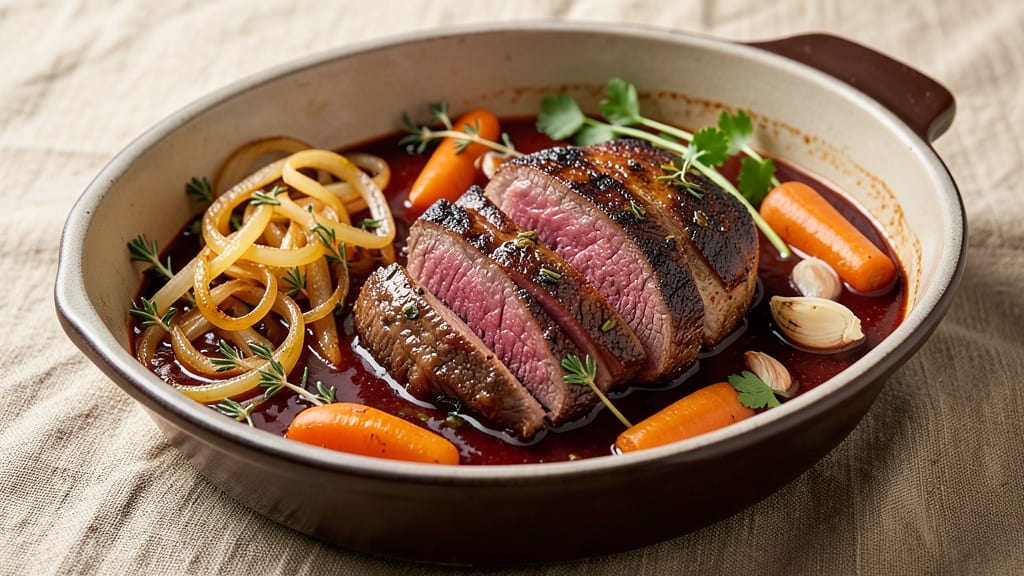
This beef base au jus recipe delivers restaurant-quality depth without the complexity of wine braises. The secret lies in mastering the au jus reduction—a rich, velvety sauce born from pan drippings and aromatic vegetables.
I’ve perfected this technique over years of testing, ensuring every bite is tender, every spoonful of gravy is packed with flavor, and the process stays straightforward for home cooks.
What sets this recipe apart is the foolproof method for creating a deep, caramelized fond (those precious browned bits) that forms the foundation of the sauce. No wine required—just beef, vegetables, and a patient reduction that transforms simple ingredients into something luxurious.
The result? A dish where succulent beef sits in a glossy, aromatic gravy that clings to every forkful, turning a weeknight dinner into an elegant experience.
You’ll start with a pan-seared beef roast—simple yet transformative—then build layers of flavor through slow cooking and careful reduction. The au jus isn’t just a side; it’s the star, balancing rich beef with bright, herby notes.
Serve it alongside roasted potatoes or crusty bread to soak up every last drop of that velvety sauce.
This recipe is designed for confident home cooks who want restaurant-quality results without the fuss. The techniques are approachable, the flavors are bold, and the outcome is undeniably satisfying. Let’s create a dish that feels like a celebration, no matter the occasion.
Ingredients for beef base au jus
Mastering au jus starts with these 13 ingredients—each playing a precise role in building rich, velvety sauce.
| Ingredient | Amount | Notes |
|---|---|---|
| Beef Chuck Roast 🥩 | 2 lb | Bone-in preferred for flavor |
| Yellow Onion 🧅 | 1 whole | Large, peeled and halved |
| Carrots | 3 medium | Peeled and cut into chunks |
| Garlic Cloves 🧄 | 6 cloves | Peeled and smashed |
| Fresh Thyme Sprigs 🌿 | 4 whole | Or 1 tsp dried thyme |
| Fresh Parsley Sprigs 🌿 | 2 tbsp | Chopped for garnish |
| Beef Broth 💧 | 2 cups | Low-sodium preferred |
| Red Wine Vinegar 🍷 | 2 tbsp | For acidity balance |
| Unsalted Butter 🧈 | 4 tbsp | Cold for deglazing |
| Diamond Crystal Kosher Salt 🧂 | 1 ½ tsp | Adjust to taste |
| Freshly Ground Black Pepper 🌶️ | 1 tsp | Coarse grind preferred |
| All-Purpose Flour 🌾 | 1 tbsp | For thickening |
| Olive Oil 🫒 | 2 tbsp | For searing |
The beef chuck roast is non-negotiable—its fat content renders down beautifully for sauce. Costco or local butchers often have the best cuts with good marbling. Look for a piece that feels firm but yields slightly when pressed. The carrots should be uniform in size to cook evenly, and yellow onions with papery skins usually have sweeter flavor. Fresh thyme and parsley from Whole Foods bulk section add brightness, but dried works in a pinch if labeled 'culinary' grade. For beef broth, Kitchen Basics or homemade is ideal—low-sodium versions prevent over-salting later.
No red wine vinegar? Apple cider vinegar works at the same amount, though flavor will differ slightly. Substituting beef broth for water requires adding an extra 1 tbsp soy sauce for umami depth. The flour acts as a thickener—if you prefer gluten-free, use cornstarch at the same ratio. For the butter, Plugrá or Land O'Lakes unsalted work best, but any cold butter will create the necessary fond. The olive oil should have a medium intensity—California Extra Virgin brands balance flavor without overpowering. All vegetables should be roughly chopped to the same size for even cooking.
Store raw beef in the coldest part of your fridge for up to 3 days. The au jus sauce keeps 5 days refrigerated or 3 months frozen—portion into ice cube trays before transferring to containers for easy reheating. Fresh herbs lose potency quickly; wrap thyme and parsley stems in damp paper towels and store in sealed bags for 4-5 days. The flour and kosher salt can be stored indefinitely in airtight containers. For best results, make the au jus the same day as cooking the beef, as the flavors meld most effectively when fresh.
Why You'll Love This Recipe
- I’ll be real: this is the dish I turn to when I’m too tired to think. Toss in the veggies, add a splash of water or broth, and let it simmer. The chuck roast’s natural collagen turns into that glossy, velvety au jus that makes everything feel like a restaurant meal. Not the prettiest, but the taste makes up for it.
- One-Pot Magic: Honestly, I swear by this recipe because it’s all in one pot—no chopping boards to clean, no extra pans to wash. Just sear the chuck roast, toss in the onions, carrots, and garlic, then let the slow cooker or Dutch oven do the heavy lifting. (Yes, even on a Tuesday night.)
- Deep Umami Bomb: The way the beef chuck roast breaks down into tender, rich slices while the thyme and garlic infuse the au jus? Ridiculously good. That caramelized onion base? It’s the kind of flavor that makes you pause mid-bite and go, “Wait, is this actually dinner?”
- Leftovers That Shine: Between us, this recipe’s leftovers are my secret weapon. Reheat the slices with a splash of the au jus, and it’s like you’re eating fresh. Freeze the extra au jus for gravy later—trust me, it’s the best way to stretch a budget-friendly roast into multiple meals without sacrificing taste.
Step-by-step instructions for beef base au jus
Transform humble beef chuck into a velvety, restaurant-quality au jus using simple techniques.
Sear the Beef Chuck for Maximum Flavor
Pat the 2 lb beef chuck roast completely dry with paper towels—this ensures a proper sear. Heat 2 tbsp olive oil in a large Dutch oven over medium-high heat until shimmering. Place the roast in the pan and sear on all sides for 8-10 minutes total, pressing down gently with a spatula to prevent curling. The goal is to develop a deep, caramelized crust that will infuse the au jus with rich beefy flavor.
Once well-browned on all sides, remove the roast and set it aside on a plate. The remaining browned bits in the pan—known as fond—are pure flavor gold. You'll use them to build the base of your au jus. Don't wipe the pan clean; those bits are essential for creating depth.
Build the Vegetable Base
In the same Dutch oven, add 1 whole yellow onion (halved) and 3 medium carrots (cut into chunks) to the pan. Cook for 5-6 minutes, stirring occasionally, until the vegetables soften and begin to caramelize. This step develops sweetness that balances the acidity of the vinegar later.
Add 6 cloves garlic (peeled and smashed) and 4 whole fresh thyme sprigs, stirring for 1 minute until fragrant. The thyme should release its piney aroma, signaling it's ready to work its magic. This aromatic trio forms the flavor foundation of your au jus, so don't rush this step—proper cooking time ensures maximum extraction of their essential oils.
Deglaze and Develop the Sauce
Pour in 2 tbsp red wine vinegar and scrape up all the browned bits from the bottom of the pan using a wooden spoon. This deglazing step captures all the meaty flavor that would otherwise stick to the pan. Let the vinegar simmer for 2-3 minutes until it reduces by half and the liquid takes on a glossy sheen.
Add 2 cups beef broth and bring to a gentle simmer. The liquid should just bubble softly at the edges. At this point, the au jus is building its depth, but it needs one final touch to achieve that silky, velvety texture that sets great au jus apart.
Thicken and Finish the Au Jus
In a small bowl, whisk together 1 tbsp all-purpose flour and 1.5 tsp diamond crystal kosher salt. Slowly sprinkle this mixture over the simmering liquid while stirring constantly with a wooden spoon. The flour will create a gentle thickening that coats the back of a spoon without making the sauce gluey.
Simmer for 10-12 minutes until the sauce reduces slightly and coats the roast when you return it to the pot. The au jus should have a glossy sheen and a consistency that clings beautifully to meat. Taste and adjust seasoning with 1 tsp freshly ground black pepper and additional salt if needed—this is where you fine-tune the balance of flavors.
Rest and Serve
Return the beef chuck roast to the Dutch oven and let it simmer gently in the au jus for 15-20 minutes, just until the meat is fork-tender. The au jus will continue to develop its rich, complex flavor during this time. Once the meat is tender, remove it from the sauce and let it rest for 10 minutes before slicing.
Strain the au jus through a fine-mesh sieve into a clean saucepan and skim off any excess fat that rises to the surface. The finished au jus should be glossy, deep in color, and rich enough to coat the back of a spoon. Serve it alongside sliced beef chuck roast, drizzled generously over each portion for that classic au jus experience.
Pro Tips For Making Beef Base Au Jus
- Brown the Chuck First: I learned this the hard way—skipping the deep sear means a pale, watery au jus. Get that roast screaming hot in a dry pan for 8-10 minutes until it’s dark brown in spots. The crust isn’t just for looks; it’s where all the flavor hides.
- Char the Aromatics: Don’t just chop the onions and garlic—treat them like you would the meat. Sear the onions until they’re almost black at the edges, then add the garlic and let it crisp just until fragrant. This isn’t a salad; it’s the foundation of your sauce.
- Deglaze with Cold Liquid: After browning the meat, don’t rush to add the broth. Let the pan cool for 30 seconds, then pour in just enough cold water or stock to loosen the fond. Hot liquid will make it splatter everywhere—and you’ll lose half the flavor in the process.
- Strain the Au Jus: Yes, it’s tempting to serve it as-is, but the thyme stems and carrot bits make a real difference. Line a fine-mesh strainer with cheesecloth or a coffee filter for the smoothest, cleanest sauce. (Your guests will notice the difference.)
Flavor customization for these flavors
Classic Umami Boost
For deeper savory notes, add 1 tbsp soy sauce or 1 tsp Worcestershire sauce when deglazing with vinegar. The umami punch elevates the au jus, especially if using low-sodium broth. I find Kikkoman soy sauce adds the most authentic depth without overpowering.
For extra richness, stir in 1 tsp fish sauce in the final reduction—it blends seamlessly with the beef flavors. 🌟
Herb Variations
Swap thyme for rosemary (2 sprigs) or tarragon (1 tbsp chopped) for a French bistro twist. Rosemary pairs beautifully with beef's natural richness, while tarragon adds a subtle anise-like brightness.
For a Mediterranean touch, include 1 bay leaf during the simmer—remove it before serving. Fresh herbs should always be added at the end to preserve their vibrant flavors.
Spicy Kick Options
Add heat by stirring in ½ tsp smoked paprika with the flour or a pinch of cayenne pepper at the end. For smoky depth, include 1 tsp chipotle powder when building the vegetable base.
I love adding 2 slices of jalapeño (seeds removed) during the simmer—they infuse subtle heat without overpowering. Always taste before serving to adjust to your preferred spice level.
Creamy Twist
For a velvety texture, whisk in 2 tbsp cold butter at the end of cooking. The butter should melt into the hot au jus, creating a luxurious finish. Alternatively, stir in ¼ cup crème fraîche or sour cream just before serving for a tangy contrast.
This works especially well with the spicy variations, balancing heat with cool creaminess. 💛
Vegetable Enhancements
Boost the vegetable base with ½ cup mushrooms (cremini or shiitake) for earthy depth or 1 fennel bulb (sliced) for anise notes. Celery root adds a subtle sweetness that complements the beef beautifully.
For color contrast, include 1 small red bell pepper (diced) during the vegetable cooking stage. These additions create visual appeal while adding complex layers of flavor.
Acidity Balance
Adjust the vinegar-to-broth ratio based on preference—try 3 tbsp vinegar for more tang or 1 tbsp lemon juice at the end for brightness. For a sweeter profile, add 1 tsp honey or 1 tbsp brown sugar when deglazing.
The key is balance: the au jus should taste rich but never one-dimensional. Always taste as you go to fine-tune the acidity level. ✨
Nutrition facts
Frequently asked questions
Can I substitute wine for the red wine vinegar in this recipe?
You can use ½ cup dry red wine instead of the vinegar, but reduce it by half first to concentrate the flavor. The wine adds complexity, but vinegar provides acidity without alcohol's overpowering taste. For a hybrid approach, use 1 tbsp vinegar + 1 tbsp wine when deglazing.
How do I know when the beef is properly seared?
The beef should have a deep golden-brown crust with no pink edges when sliced. Press gently with tongs—it should hold its shape but yield slightly. If it releases easily, sear 2-3 minutes longer per side. The fond (browned bits) should be dark and sticky, not light-colored.
What if my au jus turns out too thin?
Simmer the sauce uncovered for 5-10 minutes longer to reduce it further. For instant thickening, mix 1 tsp cornstarch + 1 tbsp cold water, stir into the sauce, and simmer until clear. Avoid adding more flour—it can make the sauce gluey. A proper au jus should coat the back of a spoon but remain silky.
Can I make this recipe in a slow cooker?
Yes! Sear the beef first, then transfer it to the slow cooker with all ingredients (except butter). Cook on Low for 6-8 hours or High for 3-4 hours. Strain and reduce the sauce on the stovetop afterward to achieve the proper texture. The slow cooker builds flavor but lacks the caramelization control of a Dutch oven.
Why does my au jus taste bitter?
Bitterness often comes from overcooked vegetables or reduced vinegar too long. Add 1 tsp sugar or 1 tbsp lemon juice to balance, or stir in 1 tbsp cold butter at the end. Avoid boiling the sauce—simmer gently to prevent harsh flavors. Taste as you go to adjust acidity or sweetness.