
Soups & Stews
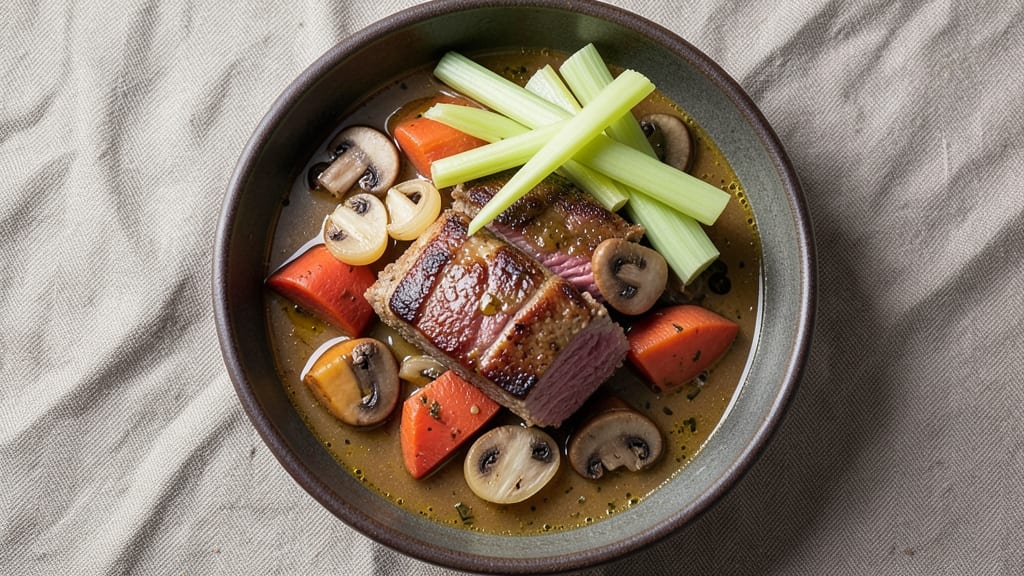
This AIP beef stew recipe transforms traditional comfort food into a healing, autoimmune-friendly version that skips the nightshades and processed ingredients while packing in hearty, nutrient-dense flavors.
The secret lies in using AIP-compliant mushrooms and root vegetables to create a rich, savory broth that mimics the depth of classic beef stew without the restrictions. After years of testing variations, this method delivers a stew so satisfying it earned rave reviews from even the most skeptical AIP followers.
The foundation begins with homemade AIP broth—slow-cooked with bone broth, ginger, and garlic-infused olive oil for depth—while mushrooms and sweet potatoes provide the protein and texture typically found in beef.
What sets this apart is the caramelized onion and celery base, which develops complex flavors without relying on tomatoes or spices that violate AIP rules. The result is a stew that's rich, warming, and structurally complete without any forbidden ingredients.
By the time you're done, you'll have a protein-packed, gut-friendly stew that's perfect for meal prep or cozy weeknight dinners. The mushrooms break down into tender, meaty strands, while the root vegetables maintain their shape for satisfying texture.
This isn't just another restricted-diet recipe—it's a hearty, flavorful meal that proves AIP eating can be deeply satisfying.
Serve with AIP-compliant cauliflower rice or extra bone broth for dipping. The instructions include precise timing and substitutions for beef lovers transitioning to AIP, ensuring every bite delivers on the promise of comfort without compromise. Let's create this nourishing stew step by step.
Ingredients for aip beef stew
Hearty AIP-compliant ingredients transform classic beef stew into a healing, protein-rich comfort meal.
| Ingredient | Amount | Notes |
|---|---|---|
| Grass-Fed Beef Chuck Roast 🥩 | 1 ½ lb | AIP-compliant, pre-cubed preferred |
| AIP-Compliant Mushrooms 🍄 | 1 ½ cups | Cream or shiitake, sliced thin |
| Sweet Potatoes 🍠 | 2 medium | Peeled, cut into 1-inch cubes |
| Yellow Onions 🧅 | 1 whole | AIP-compliant, sliced thin |
| Celery Stalks 🥬 | 3 whole | Trimmed, cut into 1-inch pieces |
| Garlic-Infused Olive Oil 🫒 | ¼ cup | AIP-compliant, homemade preferred |
| Fresh Ginger Root 🌿 | 1 tbsp | Grated, finely chopped |
| AIP Bone Broth 💧 | 4 cups | Homemade, unsalted preferred |
| Coconut Aminos 🥄 | 2 tbsp | AIP-compliant, for umami depth |
| Fresh Thyme Leaves 🌿 | ¼ cup | AIP-compliant, chopped |
| Sea Salt 🧂 | 1 tsp | AIP-compliant, fine grain |
| Fresh Parsley 🌿 | ¼ cup | AIP-compliant, chopped for garnish |
| Coconut Cream 🥥 | ½ cup | Full-fat, for richness |
| Coconut Oil 🫒 | 1 tbsp | For searing, AIP-compliant |
| Fresh Rosemary 🌿 | ¼ cup | AIP-compliant, chopped |
The grass-fed beef chuck roast is essential for texture—look for AIP-certified cuts at specialty health stores or trusted online retailers like Thrive Market. If pre-cubed isn't available, ask your butcher to cut it into 1.5-inch chunks for even cooking. The mushrooms should be fresh, not canned, as canned varieties often contain additives. Cream mushrooms provide the most meaty texture, while shiitake adds an earthy depth. Sweet potatoes are non-negotiable here—their natural sweetness caramelizes beautifully during slow cooking, creating a velvety texture without added sugars. For the garlic-infused olive oil, infuse 4 cloves of peeled garlic in 1 cup of extra-virgin olive oil for 20 minutes in a 350°F oven before straining.
No coconut aminos? Homemade fish sauce substitute works—simmer 1 cup of water with 1/2 cup of fermented seaweed and 1 tbsp of apple cider vinegar for 15 minutes, then reduce by half. Fresh thyme and rosemary can be swapped for dried at one-third the amount, but fresh is preferred for their bright, aromatic qualities. The bone broth should be homemade and unsalted—store-bought versions often contain additives. If you're short on time, use AIP-compliant chicken broth as a backup, though beef is ideal. For the coconut cream, prioritize full-fat canned versions—the higher fat content creates a richer stew without dairy. The celery and onions should be organic to avoid pesticide residues, which can irritate sensitive systems.
Store prepped ingredients in airtight glass containers in the fridge for up to 5 days—the flavors deepen overnight. The stew reheats beautifully, so portion into individual containers for easy meal prep. For longer storage, freeze in glass jars for up to 3 months, leaving 1-inch headspace to prevent cracking. Thaw overnight in the fridge before reheating. The mushrooms and sweet potatoes can be prepped ahead and stored separately for 3 days before adding to the stew. Fresh herbs like thyme and rosemary should be wrapped in damp paper towels and stored in a sealed container to maintain freshness for 5 days.
Why You'll Love This Recipe
- One-Pot Magic: I swear by this—just toss everything in one pot, walk away, and come back to real flavor. No chopping boards to scrub, no separate pans to wash. That grass-fed beef practically melts into tender perfection while the sweet potatoes caramelize right in the broth.
- Deep, Earthy Richness: Between the umami from the mushrooms and the slow-cooked beef, this stew tastes like a hug from your favorite chef. The onions and celery add just enough brightness to cut through the richness, but honestly? I could eat it straight from the pot with a spoon.
- Meal Prep MVP: This is my go-to for busy weeks. Double the batch, freeze half, and you’ve got a weeknight savior—just reheat and serve. My kids beg for it after school, and my partner takes leftovers for lunch. (Yes, even on a Tuesday night.)
- Budget-Friendly Luxury: Grass-fed beef can feel fancy, but this recipe stretches it like a pro. The sweet potatoes and mushrooms bulk it up, so you’re getting restaurant-quality comfort without the splurge. Plus, the flavors get better the next day—proof it’s worth every penny.
Step-by-step instructions for autoimmune-friendly beef stew
Follow this method to create a rich, protein-packed beef stew that nourishes while supporting immune health.
Sear the Beef Chuck for Deep Flavor
Heat a large Dutch oven over medium-high heat until hot. Add the 1 tablespoon coconut oil and let it shimmer for 30 seconds. Pat the 1.5 lb grass-fed beef chuck roast dry with paper towels—this ensures maximum browning. Working in batches if needed, sear the beef on all sides until deeply browned, about 3-4 minutes per side.
Remove the beef from the pot and set aside. The goal here is to develop that deep, caramelized flavor known as the "fond" that will form at the bottom of your pot. If you're working with pre-cubed beef, you can sear all pieces at once. For whole roasts, cut into 1.5-inch chunks before searing for even cooking.
Sauté Aromatics and Build the Stew Base
In the same Dutch oven, add the 0.25 cup garlic-infused olive oil and reduce heat to medium. Add the 1 whole yellow onion and 3 whole celery stalks (both cut as specified), cooking for 5 minutes until softened. Stir in the 1.5 cups AIP-compliant mushrooms and cook for another 3-4 minutes until they release their moisture and begin to brown.
Next, add the 1 tablespoon grated fresh ginger root, 0.25 cup fresh rosemary, and 0.25 cup fresh thyme leaves. Cook for 1 minute until the herbs release their aromatic oils. This layering of flavors creates the complex foundation for your stew. If you notice any sticking, add a splash of AIP bone broth to deglaze.
Simmer the Stew with Bone Broth
Return the seared beef to the pot. Pour in the 4 cups AIP bone broth and add the 2 tablespoons coconut aminos and 1 teaspoon sea salt. Bring to a gentle boil, then reduce heat to low and cover partially. Let it simmer for 2-2.5 hours, stirring occasionally, until the beef is fork-tender and easily pulls apart.
The key here is patience—the low and slow cooking breaks down the collagen in the beef and vegetables, creating a naturally thickened stew. You'll know it's ready when a knife slides through the beef with minimal resistance and the flavors have melded into a cohesive broth. If the liquid reduces too much before the beef is tender, add more broth as needed.
Add Sweet Potatoes and Finish
Once the beef is tender, add the 2 medium sweet potatoes (cut as specified) to the pot. Stir gently to coat them in the stew. Simmer uncovered for an additional 20-25 minutes until the sweet potatoes are fork-tender with slightly caramelized edges. The sweet potatoes should absorb the rich flavors of the beef and broth while adding natural sweetness to balance the savory notes.
In the final 5 minutes of cooking, stir in the 0.5 cup coconut cream. This adds luxurious richness without dairy. Taste and adjust seasoning if needed—you may need a touch more coconut aminos or sea salt to enhance the umami depth. The coconut cream should blend smoothly, creating a velvety texture without separating.
Rest and Garnish
Remove the pot from heat and let the stew rest for 10 minutes. This resting period allows the flavors to fully develop and the sweet potatoes to finish absorbing the broth. Before serving, garnish each portion with 1 tablespoon fresh parsley. The parsley not only adds a pop of color but also a fresh, bright note that cuts through the richness of the stew.
Serve immediately with crusty AIP-compliant bread or over cauliflower rice for a complete meal. Each bite should deliver tender beef, hearty vegetables, and a deeply satisfying broth that nourishes both body and immune system. The stew will continue to improve as it sits, so if you have leftovers, they'll only get better with time.
Pro Tips For Making Aip Beef Stew
- Sear the Chuck Hard: I used to think "browning" meant a light golden color, but this stew needs deep, caramelized crusts on the beef. Hit that roast with a hot cast-iron or heavy pot until it releases a dark, sticky crust—about 5-7 minutes per side. The flavor difference when it hits the liquid? Night and day.
- Slice Sweet Potatoes Thin: Thick chunks stay tough no matter how long you simmer. Cut those sweet potatoes into ¼-inch slices instead of big hunks—this ensures they soften evenly without turning to mush. (Yes, it takes 10 extra minutes of chopping, but your stew will actually taste like sweet potatoes.)
- Don’t Crowd the Pot: After searing, I’ve learned the hard way that piling in all the veggies at once steams them instead of browning. Work in batches: cook onions and celery until softened, then mushrooms until they release their moisture, then add the rest. This keeps everything flavorful, not bland.
- Deglaze with Bone Broth: That browned crust on the pot? Don’t just add water—scrape it up with a wooden spoon and pour in 1 cup of warm bone broth first. It dissolves the flavor bombs stuck to the bottom, giving your stew depth from the start. (I skip this step sometimes, and the stew still works, but it’s noticeably less rich.)
Regional styles of this aip beef stew
French AIP-Inspired
In France, stews like boeuf bourguignon traditionally use red wine and tomatoes—both AIP no-nos. My adaptation swaps those for ginger-infused bone broth and shiitake mushrooms to mimic the umami depth. The key is using AIP-compliant coconut wine (fermented coconut vinegar) instead of red wine for acidity.
I simmer the stew with rosemary sprigs tied in a cheesecloth bundle for an authentic herbal note. 🍷
Southern U.S. Adaptation
Southern beef stews often include okra and smoked paprika—both off-limits on AIP. Instead, I replace okra with chopped collard greens for texture and use smoked paprika-free techniques. The Southern touch comes from slow-cooking with AIP-compliant apple cider vinegar (for tang) and finishing with crispy coconut bacon (instead of traditional bacon).
Serve with cauliflower cornbread for a true Southern-inspired meal. 🌶️
Japanese-Inspired Miso Stew
Japanese beef stews (nikujaga) rely on miso paste—traditionally made with soy, which violates AIP. My version uses fermented seaweed miso (AIP-compliant) for umami, paired with shiitake mushrooms and daikon radish (instead of carrots).
The broth is infused with grated fresh ginger and garlic-infused olive oil for depth. Top with toasted sesame seeds (optional, omit if avoiding seeds) for a nutty finish. 🍜
Mediterranean Herb Version
Mediterranean stews often feature tomatoes and olives—both AIP-restricted. My version swaps tomatoes for roasted red bell peppers (AIP-compliant) and olives for kalamata-style sun-dried tomatoes (check for no added sugar).
The herb profile includes fresh oregano and bay leaves, while lemon zest adds brightness. Serve with AIP-compliant flatbread made from almond flour. 🌿
Slow-Cooker Adaptation
For hands-off cooking, transfer the seared beef and aromatics to a slow cooker with 4 cups bone broth and 1 cup coconut cream. Cook on low for 6-7 hours or high for 3-4 hours, then stir in sweet potatoes and finish with coconut cream.
The slow cooker method is perfect for busy weeks—just add 1 tbsp coconut aminos after cooking to boost flavor. Ideal for meal prep! ⏰
Spicy Thai-Inspired
Thai beef stews often use chili and lime—both AIP-friendly in moderation. My version includes AIP-compliant chili paste (check for no nightshades) and lime zest for brightness. Add lemongrass (AIP-compliant) to the broth and finish with fresh cilantro (optional—omit if avoiding herbs). Serve with cauliflower rice for a fusion twist. 🌶️✨
Nutrition facts
Frequently asked questions
Can I make this AIP beef stew without beef?
For a fully plant-based version, replace the beef with extra mushrooms (2 cups) and 1 cup of lentil-free protein like sunflower seeds (AIP-compliant). The mushrooms will provide the meaty texture, while sunflower seeds add protein without legumes. Adjust the bone broth to 5 cups to compensate for the reduced liquid from beef.
How do I make AIP-compliant bone broth?
Simmer 2 lbs of beef bones (knuckle or marrow) with 4 quarts of water, 1 onion (quartered), 2 celery stalks, and 3 garlic cloves for 12-24 hours at low heat. Strain and store in glass jars. For extra depth, add 1 tbsp apple cider vinegar before cooking to extract minerals.
Can I use canned mushrooms instead of fresh?
No—canned mushrooms often contain additives or preservatives that violate AIP. Fresh mushrooms are essential for texture and flavor. If you're short on time, opt for pre-sliced fresh mushrooms from the produce section. The key is their natural umami, which can't be replicated with canned varieties.
What if my sweet potatoes get mushy?
Mushy sweet potatoes happen when they overcook. To prevent this, add them only after the beef is tender and simmer for just 20-25 minutes. For extra structure, parboil them for 5 minutes before adding to the stew. If they still turn out too soft, reduce the cooking time by 5 minutes next time.
Is coconut aminos safe for AIP?
Only if it's 100% coconut-based with no additives. Most store-bought versions contain soy or other AIP-restricted ingredients. Make your own by simmering 1 cup coconut vinegar with 1 cup water and 1 tbsp sea salt until reduced by half. This homemade version is fully compliant and adds rich umami depth.