
Main Courses
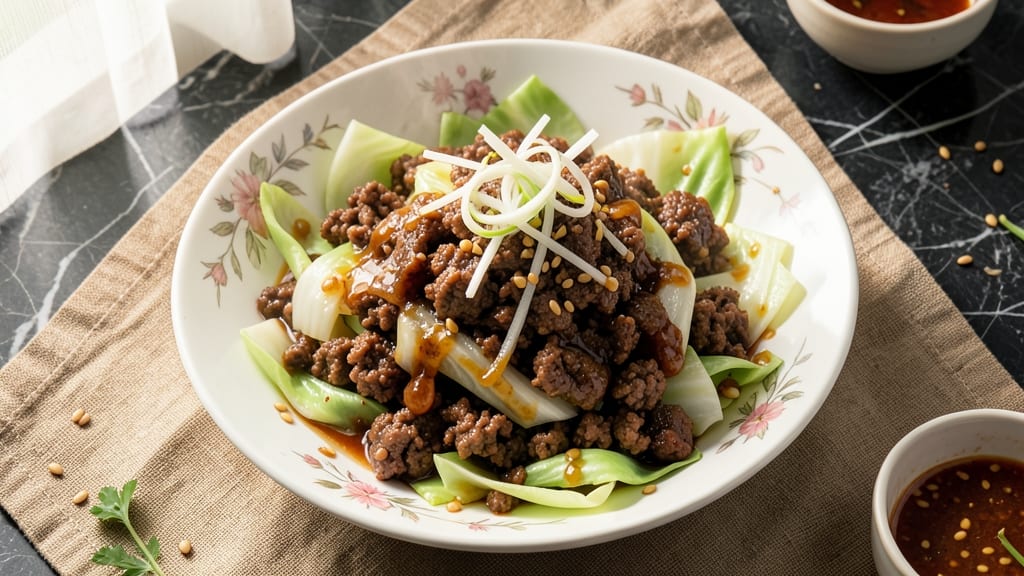
This Asian cabbage and ground beef recipe delivers crispy edges that shatter with every bite, paired with a silky, umami-rich sauce that balances sweet and savory notes. The technique combines quick-wok searing with a slow-braised finish, inspired by Korean bokkeumbap but elevated with aromatic sesame and garlic.
I developed this after years of perfecting stir-fry textures—where the beef stays juicy while the cabbage achieves that coveted caramelized crunch.
The foundation lies in proper prep: thinly slicing the cabbage for even cooking and breaking the beef into uniform pieces for consistent browning. A touch of sesame oil infuses the wok with nutty depth, while a splash of mirin adds subtle sweetness that rounds out the soy-based sauce.
The secret weapon? A two-minute rest after searing—this lets the beef reabsorb its juices while the cabbage finishes steaming in residual heat.
By the time you plate it, you’ll have tender beef with crispy edges, glossy cabbage that holds its shape, and a sauce clinging to every bite like restaurant-quality stir-fry. The aroma alone—garlic, ginger, and toasted sesame—will have everyone at the table asking for seconds.
Serve over steamed rice or noodles to soak up every last drop of that flavorful sauce.
This dish adapts beautifully: swap in kimchi for tang, add mushrooms for earthiness, or drizzle with chili oil for heat. The technique works equally well for weeknight dinners or weekend gatherings, with minimal cleanup and maximum flavor impact. Let’s get cooking—your taste buds will thank you.
Ingredients for asian cabbage and ground beef
Pantry staples plus a few specialty touches for restaurant-style crispy edges and silky sauce.
| Ingredient | Amount | Notes |
|---|---|---|
| Ground Beef 🥩 | 1 lb | 80% lean, finely chopped |
| Napa Cabbage 🥬 | 1 small head | Thinly sliced into ribbons |
| Sesame Oil 🫒 | 1 tbsp | For aroma, not cooking |
| Mirin 🍶 | 2 tbsp | Sweet rice wine |
| Soy Sauce 🥢 | 3 tbsp | Light or all-purpose |
| Garlic Cloves 🧄 | 4 cloves | Minced, fresh preferred |
| Fresh Ginger 🌿 | 1 tbsp | Grated, finely chopped |
| Neutral Oil 🫒 | 1 tbsp | Avocado or vegetable oil |
| Sesame Seeds 🌰 | 1 tbsp | Toasted, for garnish |
| White Sugar 🍚 | 1 tsp | Balances flavors |
| Black Pepper 🌶️ | ½ tsp | Freshly ground |
| Green Onions 🧅 | 2 whole | Sliced, for garnish |
| Steamed White Rice 🍚 | 2 cups | Cooked, for serving |
The cabbage is key—Napa gives that perfect crunch, but regular green cabbage works in a pinch. Look for heads with crisp, vibrant leaves (the Kroger or Trader Joe's sections usually have the best). Thinly slicing it into ribbons ensures even cooking and those coveted crispy edges. For the beef, 80% lean is ideal—leaner versions dry out. Break it into small, uniform pieces with your hands before cooking. The sesame oil? Grab the toasted kind at Asian markets—it adds depth the regular kind can't match.
No mirin? Substitute 1 tbsp honey plus 1 tbsp rice vinegar—it won't be identical, but close. Fresh ginger is best, but if you're using powdered, reduce to 1/2 tsp. Swap soy sauce for tamari if you're gluten-free, but traditional soy sauce gives that authentic umami. The sugar? It's non-negotiable for balancing the flavors—don't skip it. For extra crunch, toss in 1/4 cup crushed peanuts at the end. And if you're feeling adventurous, add 1 tbsp gochujang for heat.
Prep the cabbage first—it wilts fast. Store it in a sealed container with a paper towel to keep it crisp for up to 3 days. The cooked beef and sauce reheat beautifully—just add a splash of water and warm through. Portion into containers with rice for easy lunches. Freezes for 3 months, but the cabbage gets mushy, so it's best fresh. Toast your sesame seeds in a dry pan for 30 seconds right before serving—they'll taste fresher and add that nutty aroma.
Why You'll Love This Recipe
- One-Pan Magic: I swear by this recipe for lazy nights—just brown the beef, toss in the shredded cabbage, and let the sesame oil and mirin work their magic. No pots, no pans, no stress. That crispy cabbage edge? Happens without effort.
- Umami Bomb: The combo of mirin and soy sauce on ground beef is chef’s kiss—sweet, salty, and just a little funky. Add the cabbage’s crunch, and it’s the kind of dish that makes you go back for seconds before you even finish your first bowl.
- Lunchbox Hero: Between us, this is my go-to for meal prep. The flavors stay bold even after three days, and the cabbage holds up better than sad lettuce. Pack it cold or reheat it—either way, it’s a win.
- Budget Night Fix: Ground beef and cabbage are my pantry’s secret weapons. A single bag of Napa cabbage lasts weeks, and the sesame oil and mirin stretch across multiple meals. Filling, flavorful, and kind to my wallet—what’s not to love?
Step-by-step instructions for wok-fired Asian cabbage and ground beef
Let's create a dish with perfectly crispy beef and tender cabbage bathed in a glossy, savory sauce.
Prepare the Cabbage and Aromatics
Start by thinly slicing the small head of Napa cabbage into ribbons about ¼-inch wide. I like to remove the thick core first - it's the toughest part. Place the sliced cabbage in a large bowl and set aside. In a small bowl, combine the 4 cloves of minced garlic, 1 tablespoon of finely grated fresh ginger, and ½ teaspoon of freshly ground black pepper. This aromatic blend will infuse our sauce with deep flavor.
While you're prepping, toast the 1 tablespoon of sesame seeds in a dry skillet over medium heat for about 1-2 minutes until they turn golden brown and smell nutty. This adds that irresistible crunchy texture. Set these aside for garnishing later - they'll be our finishing touch.
Cook the Ground Beef Until Crispy
Heat 1 tablespoon of neutral oil in a wok or large skillet over high heat until shimmering. Add the 1 pound of finely chopped ground beef, breaking it up with a wooden spoon. Cook without stirring constantly for the first 2 minutes - this creates those beautiful crispy edges we're after. Once the beef starts to brown around the edges, stir occasionally for another 3-4 minutes until fully cooked through.
Here's the thing - you want the beef to be well browned but still juicy. If it starts to dry out before reaching your desired doneness, just add a splash of water and cover for 30 seconds to steam it. Remove the beef from the wok and set it aside on a plate, leaving all that delicious rendered fat behind in the pan.
Build the Flavorful Sauce
With the beef removed, reduce the heat to medium and add the garlic-ginger mixture to the wok. Stir for 30 seconds until fragrant - you should smell that wonderful garlic aroma. Add 1 tablespoon of white sugar and stir for another 30 seconds, letting it caramelize slightly. This helps balance the savory flavors and adds a touch of sweetness.
Now pour in the 2 tablespoons of mirin and 3 tablespoons of soy sauce. Stir well and let it simmer for 1-2 minutes until slightly reduced. The sauce should be glossy and coat the back of a spoon. If it's too thick, add 1-2 tablespoons of water to reach your desired consistency. Here's where the magic happens - the mirin adds that perfect balance of sweetness while the soy sauce provides depth.
Combine and Finish
Return the cooked beef to the wok and stir to coat it in the sauce. Add the sliced Napa cabbage and toss everything together for 2-3 minutes until the cabbage wilts slightly but still maintains some texture. The cabbage should be tender-crisp with just a slight bite. If the cabbage starts to cook too quickly, add a splash of water to steam it gently.
Finally, stir in 1 tablespoon of sesame oil and taste the mixture. Adjust seasoning if needed - you might want to add a bit more soy sauce for saltiness or a touch more sugar for sweetness. The sauce should be balanced with all flavors working together harmoniously. Remove from heat and let it sit for 1 minute to allow the flavors to meld.
Serve Over Steamed Rice
Divide the 2 cups of steamed white rice among serving bowls. Spoon the beef and cabbage mixture over the rice, making sure each serving gets a generous portion of that flavorful sauce. Garnish each serving with the toasted sesame seeds and sliced green onions. The sesame seeds add that beautiful crunchy contrast while the green onions bring freshness to cut through the richness.
Serve immediately while everything is hot. The contrast of crispy beef, tender cabbage, and fluffy rice creates the perfect bite. Each forkful delivers that wonderful combination of textures and flavors - crispy edges from the beef, silky sauce, and tender cabbage. This dish is perfect for a weeknight dinner that feels special without being complicated.
Pro Tips For Making Asian Cabbage And Ground Beef
- CRISP THE CABBAGE FIRST: I learned this the hard way—cooking raw cabbage with beef makes the dish soggy and sad. Slice the Napa cabbage into ½-inch ribbons, toss with 1 teaspoon soy sauce and 1 teaspoon sesame oil, then microwave for 2 minutes (yes, really). It’ll soften just enough to caramelize later without turning to mush.
- BROWN THE BEEF LOW AND SLOW: High heat makes ground beef greasy; medium-low is your friend. Break it into 1-inch chunks, spread them in the pan, and let them cook undisturbed for 3-4 minutes until the edges crisp. Stirring too soon just steams the meat—you want deep color, not pale paste.
- DON’T SKIP THE MIRIN REDUCTION: That splash of mirin isn’t just flavor—it’s the glue. After adding the beef and cabbage, pour in the mirin and let it simmer uncovered for 2-3 minutes. The alcohol burns off, and the sauce thickens into a glossy finish. (Pro move: Add a pinch of sugar if your mirin tastes too sharp.)
- SWAP SESAME OIL LAST: Sesame oil smells amazing but burns fast. Hold off until the very end—toss it in with the final stir, just before serving. A few drops brighten the dish, but overdo it, and you’ll taste bitter smoke. (I know, I know—you’re tempted to add it early.)
Regional styles of this asian cabbage and ground beef
Korean Bokkeumbap Style
This dish takes direct inspiration from Korean bokkeumbap—rice topped with stir-fried beef and cabbage. The key difference? We use ground beef instead of sliced bulgogi beef, creating a heartier, more approachable version.
For authenticity, swap the mirin for 1 tbsp gochujang (Korean chili paste) and add ½ tsp toasted sesame oil to the sauce. Garnish with 1 tbsp chopped scallions and a sprinkle of toasted sesame seeds** for that classic Korean crunch. 🌶️
Japanese Nikujaga Twist
In Japan, nikujaga (meat and potato stew) often features ground beef simmered with cabbage in a sweet-savory sauce. For this adaptation, replace the mirin with 2 tbsp Japanese-style soy sauce and add ½ cup diced potatoes (cooked separately until tender).
Deglaze the wok with 2 tbsp sake after browning the beef, then add 1 tbsp honey to the sauce for a deeper caramelization. Serve over rice with a side of steamed greens. 🍶
Chinese Stir-Fry Fusion
This version leans into classic Chinese stir-fry techniques. After searing the beef, set it aside and stir-fry the cabbage separately with 1 tbsp oyster sauce and 1 tsp Shaoxing wine.
Return the beef to the wok, then add ½ cup shredded carrots and 1 tsp cornstarch to thicken the sauce. Finish with 1 tsp chili oil for heat and a sprinkle of fried shallots for texture. The result is a vibrant, wok-friendly dish with bold umami flavors. 🌱
Thai-Inspired Spicy Version
For a Thai-inspired take, add 1 tbsp fish sauce and 1 tsp palm sugar to the sauce, along with 1-2 slices of Thai bird’s eye chili (adjust to taste). Stir in 1 tbsp lime juice at the end for brightness.
Garnish with cilantro and crushed peanuts for crunch. The heat and tang cut through the richness, making it a perfect dish for spice lovers. 🌶️
Vietnamese Caramelized Cabbage
In Vietnam, cabbage is often caramelized with fish sauce and sugar—a technique we can borrow. After cooking the beef, remove it and stir-fry the cabbage with 1 tbsp fish sauce, 1 tsp sugar, and 1 tsp black pepper until deeply caramelized.
Return the beef to the wok, then add 1 tbsp nuoc mam (Vietnamese fish sauce) and ½ cup bean sprouts for freshness. Serve with rice and a drizzle of hoisin sauce. 🥬
Nutrition facts
Frequently asked questions
Can I substitute regular green cabbage for Napa cabbage?
Yes, you can use regular green cabbage, but you'll need to adjust the prep. Remove the thick core and slice it into ¼-inch ribbons, just like Napa cabbage. Green cabbage has a slightly stronger flavor, so you might want to add an extra ½ teaspoon of sugar to balance it. The texture will be similar but slightly more robust.
How do I prevent the ground beef from drying out?
Keep the heat high when searing the beef and avoid overcrowding the pan. If the beef starts to dry out, add 1-2 tablespoons of water and cover for 30 seconds to steam it gently. Also, don't overcook it—remove it from the pan once it's just cooked through (160°F internal temperature). The resting time after cooking helps it reabsorb juices.
What if I don't have mirin? Can I use something else?
Mix 1 tablespoon honey with 1 tablespoon rice vinegar as a substitute. This combo mimics mirin's sweetness and acidity. For a more authentic flavor, you could also use 1 tablespoon dry sherry or 1 tablespoon sake, though the sweetness will be slightly different. Adjust the sugar in the recipe if needed.
Can I make this dish ahead of time?
Yes, but with a few adjustments. Cook the beef and sauce as directed, then let it cool completely. Store it in an airtight container in the refrigerator for up to 3 days. Reheat gently in a skillet with a splash of water or broth to restore moisture. The cabbage may soften more, so it's best to add fresh cabbage when reheating. For freezing, store the components separately—beef/sauce and cabbage—for up to 3 months.
What's the best way to make the beef extra crispy?
For maximum crispiness, break the beef into ½-inch pieces before cooking and use a well-heated wok or skillet. Cook it undisturbed for the first 2 minutes to form a crust, then stir occasionally. Another pro tip: Add ½ teaspoon cornstarch to the beef before cooking to help create a crispy exterior. Just be sure to cook it through completely.