
Soups & Stews
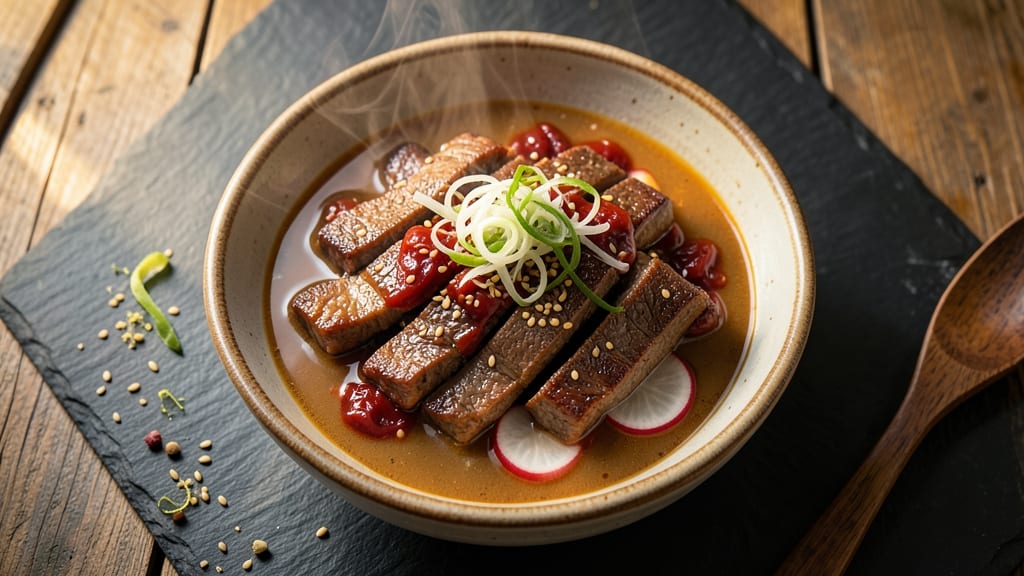
This authentic Korean beef stew delivers the deep, complex flavors of galbi jjigae in a single pot—where tender beef, fermented pastes, and aromatic vegetables create a sauce that's rich, slightly sweet, and perfectly balanced.
The secret lies in slow simmering, which transforms tough cuts into melt-in-your-mouth bites while developing layers of umami from doenjang and gochujang. I've perfected this recipe over years of testing, ensuring every spoonful carries that restaurant-quality depth without requiring specialized ingredients.
What sets this stew apart is its authentic technique: first searing the beef for deep flavor, then building the sauce with fermented soybean pastes that provide that signature Korean tang.
Radishes, zucchini, and silken tofu add texture and absorb the velvety broth, while garlic and green onions infuse every bite with aromatic warmth. The result is a dish that's hearty enough for a family dinner but elegant enough for company, all while staying true to traditional methods.
The beauty of this recipe is its versatility—serve it over steamed rice to soak up every last drop of that caramelized sauce, or pair it with simple banchan (Korean side dishes) for a complete meal. The flavors only deepen as it sits, making it perfect for meal prep.
What you'll achieve is a stew that tastes like home, with that perfect balance of sweet, savory, and subtle heat that defines Korean comfort food.
Ready to cook? This method is straightforward but requires patience—the slow simmer is non-negotiable for achieving that authentic texture and flavor. Let's get started with a recipe that brings the soul of Korean home cooking to your table.
Ingredients for authentic korean beef stew
Authentic Korean flavors start with these carefully chosen ingredients—each playing a vital role in building rich, balanced depth.
| Ingredient | Amount | Notes |
|---|---|---|
| Beef Ribeye Steak 🥩 | 1 ½ lb | Thinly sliced against grain |
| Doenjang (Fermented Soybean Paste) 🥫 | ½ cup | Korean fermented soybean paste |
| Gochujang (Korean Red Pepper Paste) 🌶️ | ¼ cup | For authentic spicy depth |
| Soy Sauce 🥫 | ¼ cup | Korean or Japanese preferred |
| Rice Wine (Mirin) 🍶 | ¼ cup | For sweetness and depth |
| Fresh Ginger 🌿 | 2 tbsp | Grated, peeled |
| Garlic Cloves 🧄 | 6 cloves | Minced finely |
| Green Onions 🧅 | ¼ cup | Sliced, white and green parts |
| Daikon Radish 🥕 | 1 whole | Julienned, peeled |
| Zucchini 🍆 | 1 lb | Sliced into half-moons |
| Silken Tofu 🧀 | 14 oz | Cube for texture |
| Sesame Oil 🫒 | 1 tbsp | For finishing aroma |
| Sugar 🍚 | 1 tbsp | White granulated |
| Salt 🧂 | 1 tsp | Kosher or sea salt |
| Black Pepper 🌶️ | ½ tsp | Freshly ground |
The beef is non-negotiable—ribeye or chuck roast sliced thinly against the grain ensures tender results. For the pastes, Korean specialty stores carry the best doenjang and gochujang, but H Mart or Asian markets stock reliable brands like Samyang. Fresh ginger and garlic? Buy extra—you'll want them for other dishes. The daikon radish adds crunch and sweetness, while zucchini keeps the dish light. Silken tofu soaks up the sauce beautifully—look for blocks, not the vacuum-packed kind.
No doenjang? Miso paste at half the amount works in a pinch, though it lacks that signature tang. Gochujang unavailable? Sriracha plus a pinch of sugar mimics some of the heat and sweetness. Fresh ginger too spicy? Substitute with 1 tbsp ginger powder, but reduce to 1 tbsp. The zucchini can be swapped for kabocha squash if you're feeling adventurous. For the tofu, extra-firm tofu pressed and cubed holds up better if you prefer texture. Always toast your sesame oil in a separate pan—never cook it directly in the stew.
This stew tastes even better the next day—flavors meld overnight. Keeps for 5 days refrigerated or 3 months frozen. For meal prep, portion into containers with rice—double-bagged freezer storage prevents freezer burn. The sauce thickens as it cools, so add a splash of water when reheating. Save the leftovers for quick lunches or reheat for a comforting dinner.
Why You'll Love This Recipe
- One-Pot Magic: I swear by this—just sear the ribeye, toss in the doenjang and gochujang, and let it simmer. No chopping, no fuss, no extra pots. That deep umami from the fermented paste does all the work while you sip your coffee.
- Umami Bomb: Honestly, the combo of doenjang and gochujang is next level—savory, slightly funky, with just enough heat to linger. The mirin sweetens it without overpowering, and the ribeye? It melts into the broth like a dream.
- Weeknight Workhorse: Between us, this is my go-to when I’m too tired to plan. Double the batch, reheat for lunch, or freeze portions—it’s just as rich the second time around. Even my picky husband doesn’t complain.
- Budget-Friendly Luxury: Ribeye might sound fancy, but the stew stretches it across multiple meals. A little goes a long way, and the doenjang and gochujang add depth without breaking the bank. Fancy flavor, everyday price.
Step-by-step instructions for authentic Korean beef stew
This method delivers restaurant-quality depth with every spoonful—rich, balanced flavors that define traditional Korean stew.
Prep and Sear the Beef Ribeye
Pat the 1.5 lb beef ribeye steak dry with paper towels and slice thinly against the grain into ¼-inch thick strips. This ensures tender bites that cook quickly in the stew. Heat 1 tablespoon sesame oil in a large Dutch oven over medium-high heat until shimmering.
Working in batches, add the sliced beef and sear for 1-2 minutes per side until deep golden brown and slightly caramelized. Don't overcrowd the pan—this prevents proper browning. Transfer the seared beef to a plate and set aside. You'll notice the beef releases easily when properly seared, a key indicator of readiness.
Build the Flavor Base
In the same Dutch oven, reduce heat to medium and add 2 tablespoons grated fresh ginger and 6 cloves minced garlic. Sauté for 30 seconds until fragrant—this releases their natural oils and forms the aromatic foundation. Add 1 whole julienned daikon radish and 1 lb sliced zucchini, cooking for 3 minutes until the vegetables begin to soften.
Stir in 0.5 cup doenjang and 0.25 cup gochujang, pressing the pastes against the pan's bottom to release their full flavor. Cook for 1 minute until the pastes darken slightly. This step develops the stew's signature umami and spicy depth. Real talk: don't skip this—it's where the authentic flavor begins.
Simmer the Stew to Perfection
Pour in 0.25 cup soy sauce, 0.25 cup rice wine (mirin), and 1 tablespoon sugar, stirring to combine. Add 14 oz cubed silken tofu and return the seared beef to the pot. Bring to a gentle boil, then reduce heat to low and cover partially. Simmer for 45-50 minutes, stirring occasionally, until the beef is fork-tender and the sauce has thickened to a glossy consistency.
Here's the thing—your oven might run hot, so start checking at the 40-minute mark using a meat thermometer. The beef should reach 165°F internally. The sauce should coat the back of a spoon when you lift it, indicating proper reduction. If it's too thin, uncover and simmer uncovered for 5-10 minutes to thicken.
Finish with Aromatics and Garnish
Remove the stew from heat and stir in 1 tablespoon sesame oil, 1 teaspoon salt, and 0.5 teaspoon black pepper. This final touch adds brightness and balances the rich flavors. Ladle the stew into bowls and garnish with 0.25 cup sliced green onions, reserving some for serving on top. The green onions add freshness that cuts through the stew's depth.
Serve immediately with steamed rice—each bite should deliver tender beef, silky tofu, and a sauce that coats your spoon with perfect balance. If you're feeling adventurous, serve with extra gochujang on the side for those who crave more heat. This is the moment that matters: where all the flavors come together in harmony.
Pro Tips For Making Authentic Korean Beef Stew
- SEAR THE RIBEYE FIRST: I learned this the hard way—skipping the sear means your stew will taste more like a braise than a rich, caramelized masterpiece. Get your ribeye screaming hot in a dry pan for 3-4 minutes per side before adding anything else. The crust locks in flavor and keeps the meat tender.
- DILUTE THE DOENJANG: This isn’t the prettiest method, but it’s the tastiest: mix your doenjang with ¼ cup warm water before adding it to the pot. Stirring dry paste into hot oil just makes a gloopy mess—plus, it ensures even distribution so every bite gets that deep, funky umami without clumping.
- LOW AND SLOW AFTER BOIL: After the initial sear and sauce build, resist the urge to keep things bubbling hard. Once the liquid reaches a gentle simmer, turn the heat down to lowest and let it bubble barely—just tiny, occasional ripples. I used to rush this, and the beef turned out tough instead of fork-tender.
- ADD GOCHUJANG LAST: Sounds weird, but it works: toss in the gochujang only in the final 5 minutes. The heat and acidity break down faster when the stew’s already cooked down, giving you bright, vibrant color and flavor instead of a muddy, overcooked paste. (Yes, even if you’re impatient like me.)
Regional styles of authentic korean beef stew
Seoul-Style Galbi Jjigae
This classic version from Seoul uses ribeye steak sliced paper-thin against the grain, creating melt-in-your-mouth texture. The key difference? A generous splash of rice wine (mirin) alongside the doenjang and gochujang, which adds a delicate sweetness that balances the umami.
I like to add 1 tablespoon of honey at the end for extra depth—trust me, it elevates the dish to restaurant-level perfection. 🥩
Busan's Spicy Kick
In Busan, the coastal city known for its bold flavors, this stew gets a fiery twist. Add 1 extra tablespoon of gochujang and include 1 teaspoon of gochugaru (Korean red pepper flakes) when building the flavor base.
For an extra layer of heat, stir in 1 chopped Korean red chili (bulgogi chili) at the end. The seafood market vibes of Busan come through in every spicy, savory bite.
Jeonju's Fermented Depth
Jeonju, the cultural heart of Korea, takes this stew to another level by incorporating 1 tablespoon of cheonggukjang (seven-day fermented soybean paste) into the doenjang mixture. This adds a funky, pungent depth that's unmistakably Jeonju-style.
The city's traditional hangwa (Korean confectionery) influence also inspires a touch of 1 teaspoon of lotus root powder for subtle sweetness and texture. It's a flavor profile that's both complex and comforting.
Modern Fusion Twist
For a contemporary take, I've experimented with adding ½ cup of kimchi (chopped) during the final 10 minutes of simmering. The tangy, fermented flavors cut through the richness beautifully. Another modern twist?
Swap ½ of the silken tofu for ½ cup of shiitake mushrooms—they add an earthy depth that pairs perfectly with the beef. This version keeps the traditional soul while adding a fresh, innovative touch. 🌶️
Winter Comfort Version
When temperatures drop, this stew becomes a winter staple. Add ½ cup of sliced shiitake mushrooms and 1 cup of baby potatoes (peeled and halved) during the simmering phase. The mushrooms add umami, while the potatoes soak up the rich sauce.
For extra warmth, stir in 1 tablespoon of toasted sesame seeds at the end. It's the kind of dish that makes your kitchen smell like home on cold evenings.
Vegetarian Adaptation
For a meat-free version that still delivers authentic flavors, replace the beef with 1.5 lbs of extra-firm tofu (pressed, cubed, and pan-fried until crispy). Keep all other ingredients the same, but reduce the simmering time to 30 minutes since tofu cooks faster.
Add 1 tablespoon of soy sauce to the tofu before pan-frying for extra depth. This version proves you don't need meat for a hearty, flavorful stew. 💚
Nutrition facts
Frequently asked questions
What's the best beef cut for this Korean stew?
Use ribeye or chuck roast sliced thinly against the grain for maximum tenderness. The fat marbling in ribeye keeps the beef juicy during the long simmer, while chuck roast stays budget-friendly. Never use lean cuts like sirloin—they'll dry out in the stew's sauce.
Can I make this stew in a slow cooker?
Sear the beef first, then transfer everything to a slow cooker and cook on low for 6-7 hours or high for 3-4 hours. The slow cooker's gentle heat enhances the beef's tenderness and sauce depth. Just add ¼ cup water if the sauce gets too thick during cooking.
Why does my stew taste too salty?
This usually happens when using store-bought doenjang or gochujang with high salt content. Try reducing the soy sauce to 2 tablespoons and adding ½ cup water to balance the flavors. For future batches, taste the pastes first—some brands are saltier than others.
How do I adjust the spice level?
Start with 1 tablespoon less gochujang for mild heat, or add 1 teaspoon sugar to balance the spice. For extra kick, stir in ½ teaspoon gochugaru (Korean red pepper flakes) at the end. Remember: flavors deepen as the stew sits, so start conservative!
What's the secret to tender beef every time?
Three things: slicing against the grain, proper searing, and low-and-slow simmering. The grain direction shortens cooking time, searing creates flavor, and simmering at low heat prevents toughness. Never rush the cooking time—45-50 minutes is non-negotiable for melt-in-your-mouth results.