
Soups & Stews
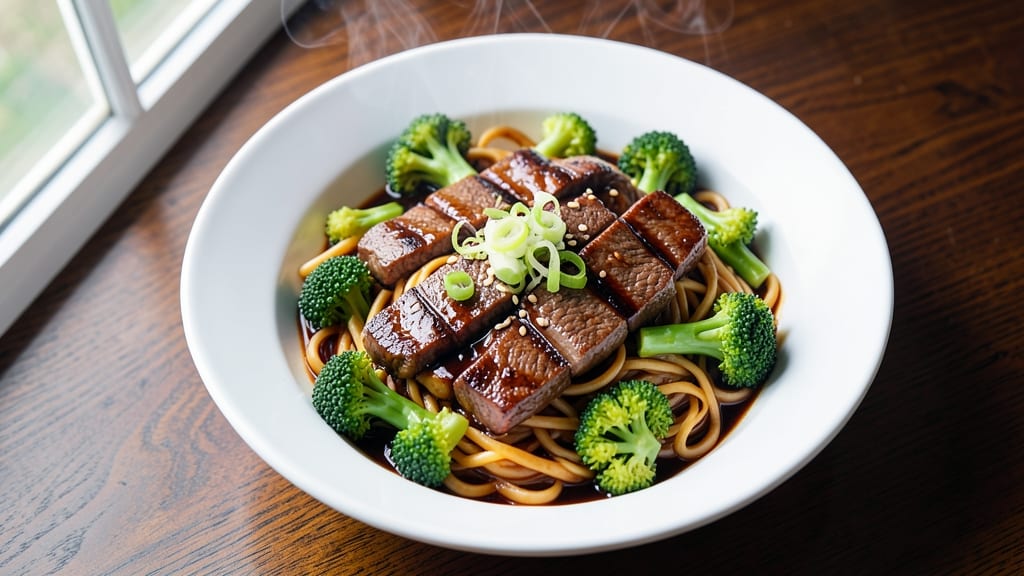
This beef and broccoli noodle stir fry delivers restaurant-quality wok-tossed flavor with silky sauce and satisfying crunch in every bite. The secret lies in high-heat stir-frying that keeps beef tender yet caramelized, while broccoli stays vibrant and crisp-tender.
I've perfected this technique over years of testing, ensuring the sauce clings perfectly to noodles without making them soggy.
The recipe begins with a simple marinade for the beef—just soy sauce, cornstarch, and a touch of ginger—that creates a tender, slightly sticky exterior ideal for wok-frying. Broccoli gets a quick blanch to preserve its bright green color and crisp texture before joining the beef in the pan.
Meanwhile, wide noodles absorb the savory sauce beautifully, becoming the perfect vessel for all the bold flavors.
What makes this dish truly special is the sauce—a balanced blend of soy, oyster, and hoisin—that's both rich and slightly sweet, with a hint of garlic and ginger for depth.
The high-heat stir-fry technique ensures the beef develops a caramelized crust while remaining juicy inside, and the broccoli maintains its vibrant color and satisfying crunch. Every forkful delivers perfect texture contrast and layers of umami flavor.
This stir fry comes together in under 30 minutes, making it ideal for weeknight dinners or meal prep. Serve it over steamed rice for extra heartiness or enjoy it as-is for a satisfying one-bowl meal.
The recipe scales easily, so you can double or triple it for feeding a crowd. Let's get cooking!
Ingredients for beef and broccoli noodle stir fry
Restaurant-quality wok-tossed flavor starts with these 14 essential ingredients—each playing a precise role in texture and taste.
| Ingredient | Amount | Notes |
|---|---|---|
| Flank Steak 🥩 | 1 ½ lb | Thinly sliced against grain |
| Egg Noodles 🍜 | 12 oz | Wide, flat noodles preferred |
| Fresh Broccoli 🥦 | 1 ½ lb | Cut into bite-sized florets |
| Soy Sauce 🍶 | ½ cup | High-quality, low-sodium preferred |
| Oyster Sauce 🍶 | ¼ cup | Authentic, not imitation |
| Hoisin Sauce 🍶 | ¼ cup | Sweet and savory balance |
| Cornstarch 🌾 | 2 tbsp | For tenderizing beef |
| Fresh Ginger 🧄 | 1 tbsp | Grated, for marinade |
| Garlic Cloves 🧄 | 4 cloves | Minced for sauce |
| Sesame Oil 🫒 | 1 tbsp | Toasted, for aroma |
| Vegetable Oil 🫒 | ½ cup | High smoke point |
| Green Onions 🧅 | ¼ cup | Sliced, for garnish |
| Salt 🧂 | 1 tsp | Kosher or sea salt |
| Black Pepper 🌶️ | ½ tsp | Freshly ground |
The flank steak is non-negotiable—it's lean yet tender when sliced thin against the grain. Costco or your butcher's counter will have the best quality, often pre-sliced for stir-fry. Look for bright red meat with good marbling, not gray or slimy. Fresh broccoli should have tight florets and vibrant green stems—Trader Joe's has great pre-cut florets if you're short on time. Egg noodles? Kung Pao or chow mein noodles from the Asian aisle are ideal, but any wide noodle works. The secret to perfect texture is cooking them al dente, then tossing with sauce at the end.
No oyster sauce? Substitute with 2 tbsp soy sauce plus 1 tbsp brown sugar—it won't be identical, but close. Hoisin sauce can be swapped for 1 tbsp soy sauce plus 1 tsp honey. The cornstarch marinade is critical for tender beef—don't skip it. For ginger, fresh is best, but powdered works in a pinch (use half the amount). Garlic can be roasted for a sweeter flavor if you're feeling fancy. Sesame oil adds aroma, but use sparingly—it's potent. The vegetable oil is just for frying; you'll finish with sesame oil for that wok-house aroma. Green onions? Freeze any extras—they keep for months frozen.
Prep the beef and broccoli first—they'll wait while noodles cook. Broccoli blanches in 1 minute, then shocks in ice water to lock in color. The sauce can be made ahead and reheated—it keeps for 5 days in the fridge. For meal prep, store components separately and stir-fry fresh. Leftovers reheat beautifully in a skillet with a splash of water. Double the recipe? Use a 14-inch wok or large skillet—crowding kills the sear. The high-heat technique is key: beef should sizzle loudly for 30 seconds per side.
Why You'll Love This Recipe
- One-Pan Magic: I swear by this recipe—just one pan, no mess. Slice the flank steak thin, toss it with soy and oyster sauce, and let the high heat do the work while the broccoli crisps in the same pan. The noodles go in last, soaking up that savory sauce like a dream.
- Umami Bomb: That combo of soy and oyster sauce? It’s the secret weapon. The broccoli gets a little char, the beef stays tender with just enough bite, and the noodles turn into the perfect sponge for all that rich flavor. Honestly, I’ve tried other beef and broccoli dishes, but this one hits different.
- Lunchbox Hero: Between us, this is my go-to for meal prep. Cook a big batch, portion it into containers, and you’ve got lunch sorted for days. The noodles stay al dente if you refrigerate them right, and the flavors actually get better the next day—no sad leftovers here.
- Budget Win: Flank steak stretches far when sliced thin, and broccoli’s one of the most affordable veggies out there. A single package of egg noodles and a few pantry staples mean you’re not breaking the bank, but the dish still feels like a restaurant takeout. My wallet and taste buds agree.
Step-by-step instructions for beef and broccoli noodle stir fry
Master this wok-tossed classic with perfectly tender beef and vibrant broccoli in a silky sauce.
Prepare the Flank Steak for Maximum Tenderness
Slice the 1.5 lb flank steak thinly against the grain into ¼-inch thick strips. Place the sliced steak in a bowl and sprinkle evenly with 2 tbsp cornstarch, tossing to coat completely. This creates a light barrier that prevents the beef from toughening during the quick stir-fry.
In a separate small bowl, combine 0.5 cup soy sauce, 1 tbsp freshly grated ginger, 4 minced garlic cloves, 0.5 tsp black pepper, and 1 tbsp toasted sesame oil. Pour this marinade over the cornstarch-coated beef and toss gently to distribute evenly. Let it marinate for 15-20 minutes at room temperature—this ensures even cooking and maximum flavor infusion.
Blanch and Shock the Broccoli for Crisp-Tender Texture
Cut the 1.5 lb fresh broccoli into bite-sized florets, keeping the stems intact for structure. Bring a large pot of water to a rolling boil and add 1 tsp salt. Once boiling, add the broccoli and blanch for exactly 1 minute—this preserves vibrant color while softening just enough to prevent toughness during stir-frying.
Immediately drain the broccoli and transfer it to a large bowl filled with ice water for 2 minutes to stop the cooking process. Drain once more and pat dry thoroughly with paper towels. This "shock" method prevents the broccoli from turning mushy during the stir-fry while maintaining its signature bright green color.
Cook the Egg Noodles to Al Dente Perfection
Cook the 12 oz egg noodles according to package instructions until 1 minute shy of al dente. The noodles should have a slight bite but not be fully tender—they'll finish cooking in the hot wok. Drain the noodles and toss immediately with 1 tbsp vegetable oil to prevent sticking. Keep them covered to maintain heat while you prepare the remaining components.
Here's the thing—overcooked noodles turn mushy in stir-fries. The goal is to have them tender but still holding their shape when they hit the wok. If you're unsure, test one noodle by biting into it—it should offer slight resistance before yielding.
Build the Signature Sauce and Stir-Fry the Beef
Heat 0.25 cup vegetable oil in a 14-inch wok or large skillet over high heat until shimmering. Add the marinated beef in a single layer and let it sear undisturbed for 1-2 minutes until the edges turn golden brown. This initial sear develops deep flavor through the Maillard reaction before you toss everything together.
Remove the beef and set aside. In the same wok, add 0.25 cup oyster sauce, 0.25 cup hoisin sauce, and 0.25 cup green onions, stirring to combine. Let the sauce simmer for 1 minute until slightly thickened. Return the beef to the wok and toss vigorously for 30 seconds to coat evenly in the sauce.
Combine and Finish with Perfect Texture
Add the blanched broccoli and cooked noodles to the wok, tossing everything together for 2-3 minutes over high heat. The high heat and constant tossing create that signature wok-tossed texture—crisp vegetables, tender beef, and silky noodles all working in harmony. If the sauce seems too thick, add 1-2 tablespoons of water to loosen it slightly.
Finish by drizzling with an additional ½ teaspoon sesame oil and tossing once more. Transfer immediately to serving plates, garnishing with extra green onions for freshness. Serve while hot, as the flavors meld best when everything is piping hot—this dish tastes best straight from the wok!
Pro Tips For Making Beef And Broccoli Noodle Stir Fry
- CUT STEAK AGAINST THE GRAIN: Flank steak’s fibers run long—slicing perpendicular to them makes each bite tender. Freeze the meat for 20 minutes first if it’s stubborn, then angle your knife at 45 degrees for clean slices. I used to overlook this, and my beef always felt chewy by the end.
- BLANCH BROCCOLI FIRST: Toss broccoli florets in boiling water for 30 seconds before stir-frying—it crisps up faster and holds its bright color. Drain and shock in ice water to stop cooking; otherwise, you’ll end up with sad, limp florets by the time the beef finishes.
- SAUCE IN STAGES: Don’t dump all the soy and oyster sauce at once. Start with half, let it reduce into the beef for 30 seconds, then add the rest—this builds depth instead of drowning the dish. I learned this after one batch tasted flat, like someone forgot the seasoning.
- DON’T OVERCROWDLE THE PAN: Stir-frying works because of airflow—pack too much in, and you’ll steam the beef instead of searing it. Cook the steak in batches if needed, and keep the heat high. I’ve seen people try to rush this, and the result is always greasy, unevenly cooked meat.
Pro cooking tips for this dish
Wok Selection Matters
Your choice of wok makes a huge difference in achieving that signature wok-tossed texture. I swear by a carbon steel wok—it heats up faster and retains heat better than cast iron, which is essential for high-heat stir-frying.
A 14-inch wok is ideal for this recipe, giving you enough surface area to toss everything without crowding. If you don’t have a wok, a heavy-bottomed cast iron skillet works in a pinch, but preheat it for at least 10 minutes on high heat to mimic a wok’s performance. 🔥
High Heat is Non-Negotiable
This stir-fry thrives on high heat—your wok or skillet should be screaming hot before adding oil. Test it by flicking a drop of water onto the surface: if it sizzles and evaporates instantly, you’re ready.
The beef needs that intense heat to develop a caramelized crust while staying tender inside. If your pan isn’t hot enough, the beef will steam instead of sear, leading to tough, gray meat. Keep the heat cranked until the very end—even when tossing everything together. ⚡
Marinate at Room Temp
Never skip letting the beef marinate at room temperature for 15-20 minutes before cooking. Cold meat releases moisture unevenly, causing it to steam instead of sear. Take the beef out of the fridge 30 minutes before starting the recipe to give it time to warm up.
While it marinates, prep your broccoli and noodles—this keeps everything on schedule. Pro tip: Pat the beef dry with paper towels before stir-frying to ensure maximum contact with the hot pan. 💡
Sauce Timing is Critical
The sauce should be simmered for exactly 1 minute before adding the beef back in. This reduces it slightly, creating a glossy finish that clings beautifully to the noodles. If you rush this step, the sauce will be too thin and watery.
For extra depth, I like to add 1 tsp of honey to the sauce if I want a touch more sweetness. Taste as you go—adjust with a splash of soy sauce if needed.
The goal is a sauce that’s silky but not runny, with just enough body to coat every bite. ✨
Toss Like a Pro
Stir-frying isn’t just about tossing ingredients—it’s about technique. Use a wide spatula or wok spoon to keep everything in motion. Start by searing the beef in one section of the pan, then push it to the side and work with the broccoli in the empty space.
This prevents overcrowding and ensures everything gets that perfect sear. When combining everything, toss in fast, short bursts—think of it like flipping pancakes. The key is to keep the heat high and the ingredients moving constantly. 💪
Finish with Fresh Aromas
The final drizzle of sesame oil and sprinkle of green onions are what elevate this dish from good to restaurant-quality. Sesame oil adds a nutty aroma that wafts through the air, while green onions bring a bright, fresh contrast to the rich sauce.
Add them right before serving so they stay crisp and vibrant. For an extra touch, I sometimes sprinkle toasted sesame seeds on top—just ½ teaspoon is enough to add texture and visual appeal. 🌟
Nutrition facts
Frequently asked questions
Why does the recipe call for blanching broccoli instead of stir-frying it raw?
Blanching broccoli for 1 minute then shocking it in ice water preserves its vibrant green color and crisp-tender texture—critical for stir-fry success. Raw broccoli would release too much moisture during cooking, making the dish soggy. This method also softens the florets just enough to prevent toughness while keeping them from overcooking in the wok.
Can I substitute flank steak with another cut of beef?
Yes, but choose thinly sliced cuts like sirloin, ribeye, or even pre-sliced stir-fry beef from the grocery store. Flank steak is ideal because it's lean yet tender when sliced against the grain. Avoid tougher cuts like chuck roast—they won't achieve the same silky texture. For extra tenderness, marinate for 30 minutes instead of 15-20 minutes if using a less tender cut.
How do I prevent the noodles from turning mushy when stir-frying?
Cook noodles just 1 minute shy of al dente, then toss immediately with 1 tbsp vegetable oil to prevent sticking. Keep them covered while prepping other ingredients. When stir-frying, work quickly over high heat—the residual heat will finish cooking them perfectly without oversoftening. Never add cold noodles to the wok; they'll cool the pan and make the beef tough.
What's the best way to make this dish spicier?
Add ½ teaspoon red pepper flakes to the sauce mixture, or stir in 1 tbsp sriracha at the end. For heat lovers, sear the beef with 1 thinly sliced chili pepper in the wok before removing it. Garnish with chopped red chili or a sprinkle of cayenne pepper for extra kick. Balance the heat with a squeeze of lime juice if needed.
Can I make this recipe gluten-free?
Yes! Use tamari or coconut aminos instead of soy sauce, and ensure your oyster and hoisin sauces are gluten-free. For extra flavor, add 1 tbsp gluten-free fish sauce to the marinade. Check all ingredients carefully—some hoisin sauces contain wheat. The cornstarch can be replaced with arrowroot powder if needed.